

Engineering With People in Mind
A robotics engineer learns that assistive technology is never one-size-fits-all.
Oct 5, 2026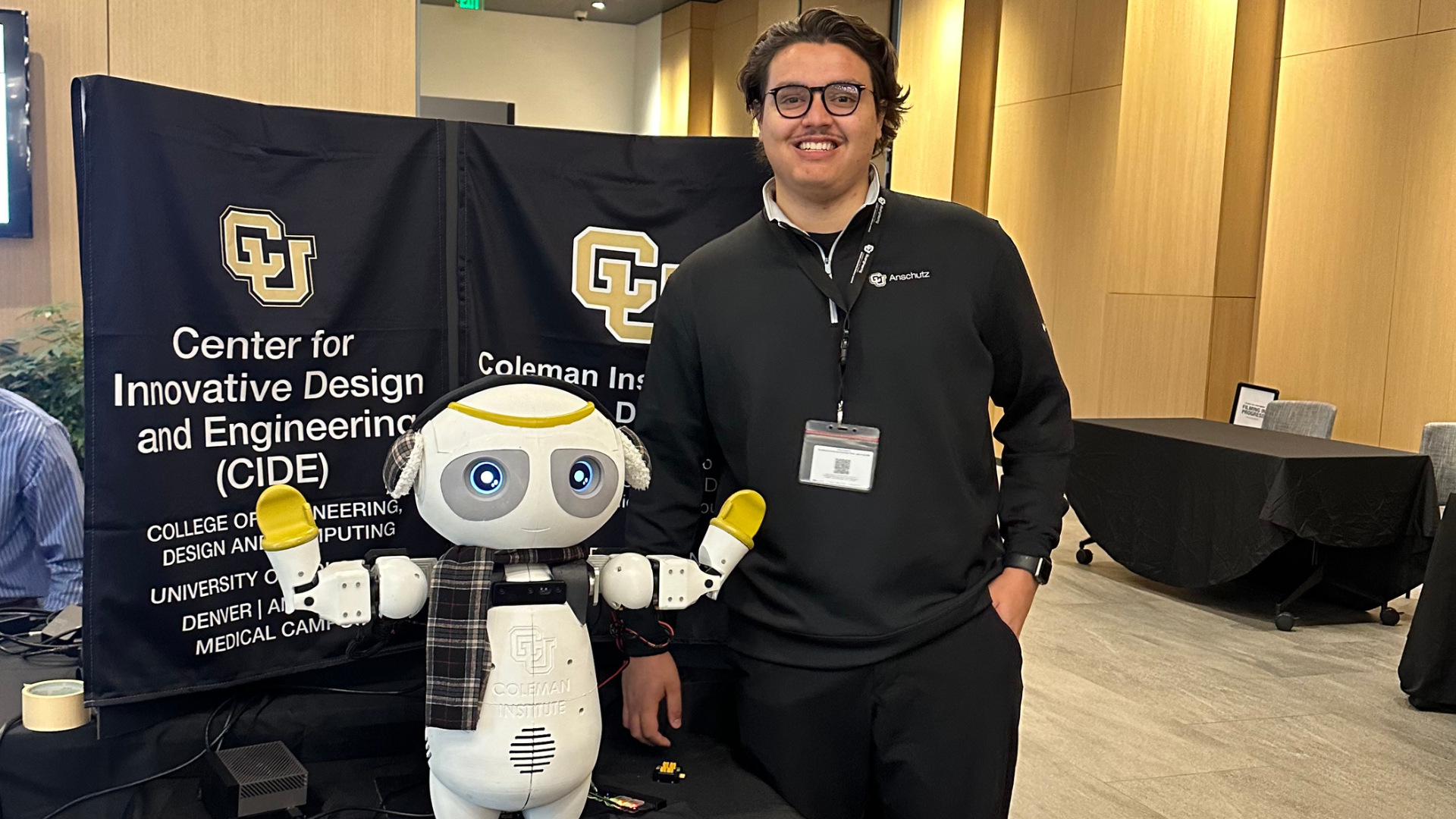
At the CIDE Assistive Technology Clinic in Denver, occupational therapists and speech-language pathologists help people with disabilities use and set up the assistive technology they need every day. Recently, one CIDE client had a unique problem. She uses a mechanical switch, or a large button, she presses with her hand to operate a power assist device on her wheelchair. Her switch sits on a mount attached to her wheelchair, so it stays within reach. The switch is oval, but the mount was made for a round one.
It’s a round peg, square hole problem, the same kind the Apollo 13 crew famously solved with duct tape and a plastic bag. The stakes here were lower, but if a switch doesn’t sit securely, she can’t count on it to stop her wheelchair when she needs it to stop. Ten years ago, a fix like this would have meant ordering a new custom part and waiting or making do. Today the faculty and students at CIDE can design and build one in-house.
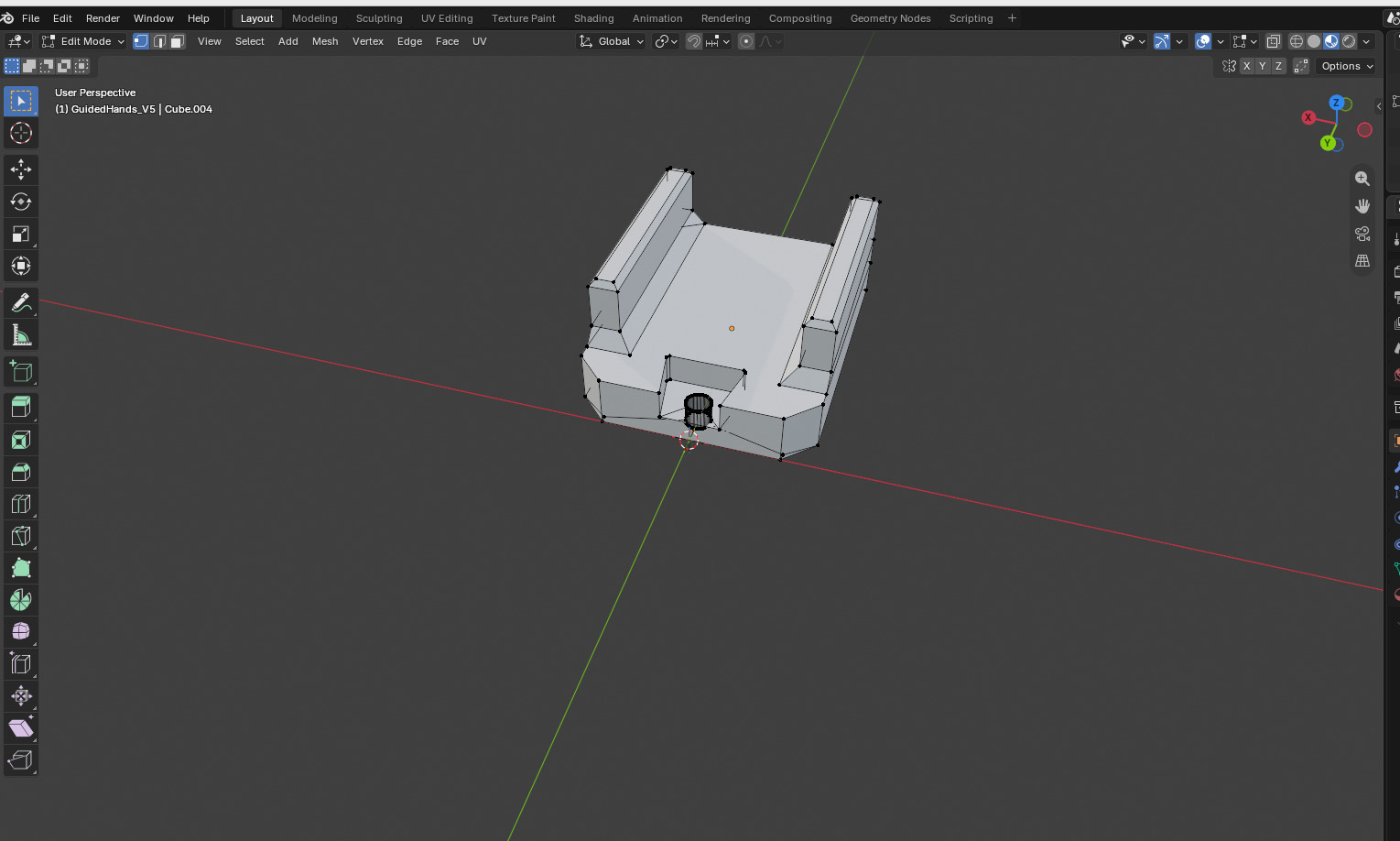
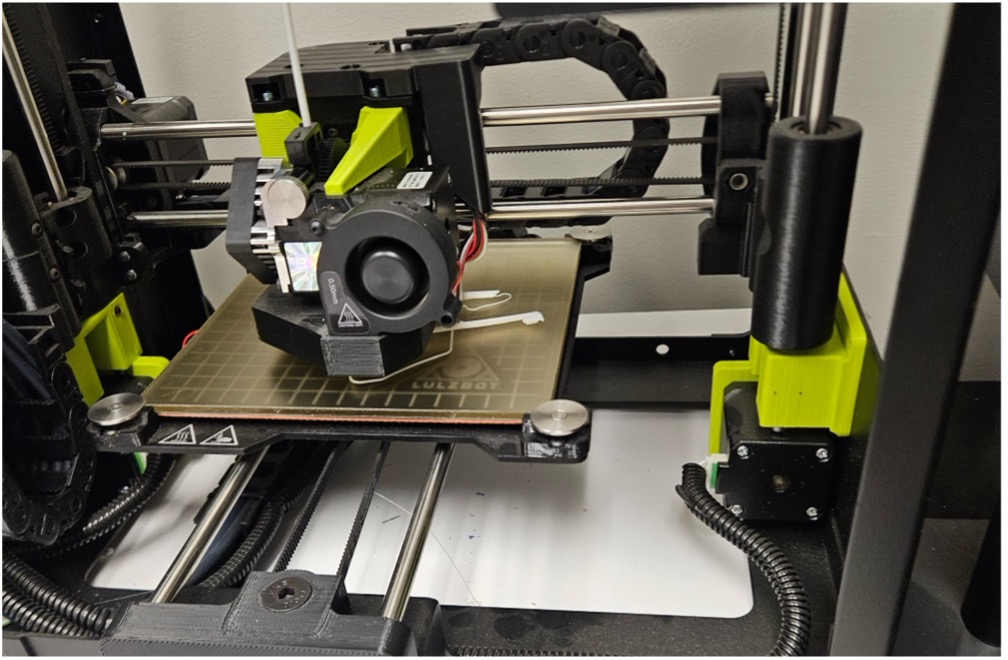
Graduate student Arturo Murra took on the job. He measured both parts, designed an adapter in Blender, a free 3D-modeling program, and printed it on CIDE’s 3D printer. “The first print was too small, and the second was too big” he said with a big smile, “then just right!”. He mentioned that his next step is to follow up with the clinician and client to make sure the adapted mount will work for her.
From Mexico to Denver
Arturo is tall, with dark wavy hair, black-rimmed glasses, and a big, easy smile. He is completing fieldwork for the Graduate Certificate in Assistive Technology and Inclusive Engineering at CU Denver. He observes clinical sessions and supports the center with 3D printing: switch mounts for wheelchairs, mounts for augmentative communication devices, and repairs around the clinic.
Originally from Torreón in Coahuila, Mexico, Arturo has a background in robotics engineering. His interest in the field was sparked by the 2014 Disney movie, Big Hero 6, about engineers who build a cuddly, heroic healthcare robot. In his last year of undergrad he took on medically oriented research, and he found that he most enjoyed using robotics to help people directly.
Building SMILEi
That interest led him to Dr. Ismael Sánchez-Osorio and the SMILEi robot project at the Department of Biomedical Engineering. Dr. Sánchez-Osorio’s work focuses on enhancing the utility of Social Assistive Robots (SARs). The focus of SMILEi (Social Multimodal Interface for Learning and Embodied Intelligence) is to maintain the mental well-being of older adults, especially those impacted by cognitive disabilities. Arturo worked on arm control for the little SMILEi robot. A fellow student, who is also his roommate, built the robot’s eyes.
His favorite moment from that groundbreaking endeavor came when every team member’s part finally worked together. “It’s always good to see your project come to life,” he said. The team is now researching how to bring SMILEi to as many people as possible. Arturo hopes it can become a companion in clinical settings, supporting patients, families, caregivers, and clinicians as the population of older adults grows.
What the Clinic Taught Him
After all that time spent on the robot arms and voice, Arturo now focuses on a different kind of engineering. Fieldwork allows for partnership between clinicians and engineers, and it has changed how he thinks about his work and impact. “There’s not really a one-size-fits-all solution,” he said. Each person needs something different, so every solution gets tailored and refined over several tries. He credits his instructors and the clinic team with giving him room to experiment. “You realize it’s okay to mess it up.”
Arturo volunteers for the custom builds clients need, then follows up to make sure each solution works in daily life. “When we see a client need that can’t be easily solved with existing technology, he jumps in and makes it happen,” said occupational therapist, Dr. Becky Breaux. “I asked him if he could print a 3D part for one of my clients, thinking it would take a while, and a few days later there it was. Problem solved!”
One client loves playing Xbox games, but his adaptive joystick wasn’t quite working for him. Arturo researched options and found plans for a 3D-printable joystick attachment. “My client loves him,” said clinician Ruthie Rayner “...the plan for our next session is to try out adaptive joysticks while Arturo plays him in FIFA soccer.”
What’s Next
Arturo expects to graduate in May 2027 and is balancing fieldwork with his thesis. He hasn’t decided where he’ll work yet, but he plans to stay connected to CIDE. Someday he hopes to take what he has learned back to Mexico. Wherever he lands, he wants to keep building solutions one person at a time.
About the Certificate
Want to design technology that fits the person using it? Learn about the Graduate Certificate in Assistive Technology and Inclusive Engineering, including hands-on fieldwork at CIDE.
Author: Elizabeth Coughanour
The Center for Innovative Design and Engineering (CIDE) at CU Denver advances assistive technology through innovative research, academic programs, and industry partnerships. To learn about our academic opportunities, visit Academics. For industry partnerships, visit Industry Services. To explore additional collaboration opportunities, contact CIDE Director, Dr. Cathy Bodine.