
One Billion
People live with disabilities worldwide.

One Billion
People live with disabilities worldwide.Society is Aging
By 2030, one out of every five Americans will be at or above retirement ageDemand Fuels Innovation
One in two older adults will experience disability as they age.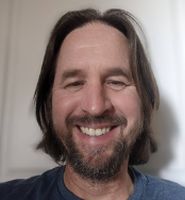
Primary Phone:3037244197
Alt Phone:3039173798
Research Complex II
12700 East 19th Avenue
6016
Aurora, CO 80045
Dr. Hunter is an Associate Professor in Bioengineering at CU Denver – Anschutz. Trained as a mechanical engineer (fluid and solid computational mechanics, vibration, and acoustics), he now works in bioengineering. Since obtaining his PhD, he has worked in industry on the simulation and analysis of ship shock, measured and modeled the structural properties of the human pulmonary and systemic vasculatures, obtained detailed mechanics descriptions of the cardiac system from processing of echocardiographic and magnetic resonance images, and many more. These projects utilized his skills in engineering mechanics, computer programing, data management, and advanced statistics including unsupervised machine learning techniques. More recently, he is involved in an imaging guidance augmented reality (AR) project with the DoD as lead developer and a second AR team project supported by the Coleman Institute. For the ARIAD project, he will apply his skills in all noted technology subject areas but especially with social assistive robotics and translational science.
CU Denver
The Hub, Bioengineering
1224 5th Street
Suite 130
Denver, CO 80204
303-315-1280