

From Code to Care
Jack’s Path from Computer Engineering to Biomedical Innovation
Mar 4, 2026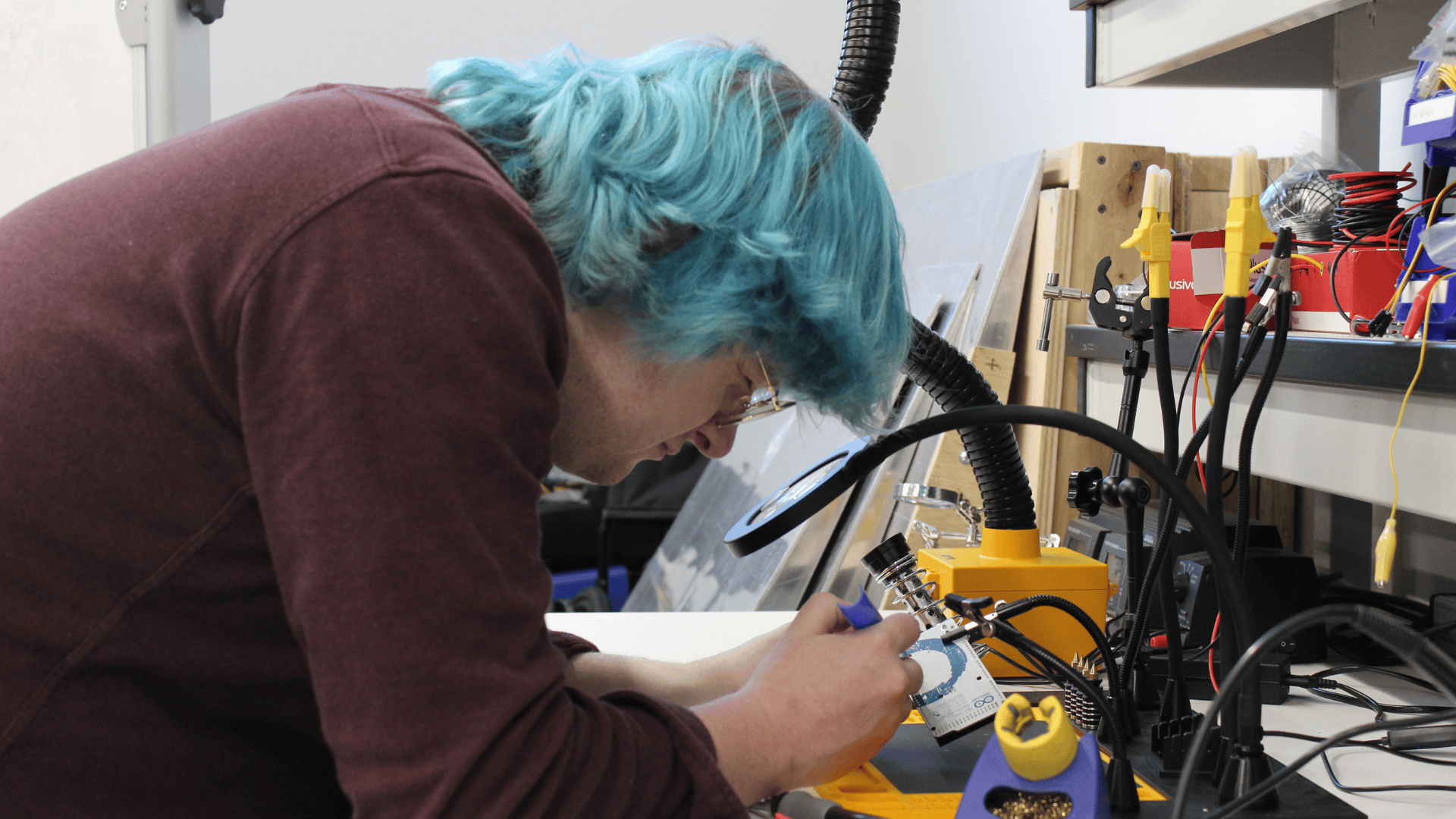
Jack Lueck's path to biomedical engineering didn't begin in a hospital or a clinic. It began in code.
With a background in computer engineering, Jack built his foundation working with data systems, artificial intelligence, and real-time computing, the quiet infrastructure behind much of the modern world. But as his technical skills deepened, so did a question: Where could those tools make the greatest difference?
That question led him to CU Denver's Master of Science in Biomedical Engineering, a program where engineering, medicine, and clinical research converge. Here, advanced computing isn't just about efficiency or scale. It's about improving lives.
"The 'hook' for me was the opportunity to tackle the challenging problems experienced by people all over the world," Lueck said. "I was drawn to the fact that solutions in this field aren't just profit-driven; they offer unique, personalized care tailored to the specific needs of a population."
For Jack, the opportunity of studying Biomedical Engineering offered something powerful: a way to channel highly technical skills toward deeply human outcomes. The same systems used to process massive datasets or train AI models could now help improve healthcare, accessibility, and assistive technology, tools designed not simply to function, but to help people live more independently.
Applying Computer Engineering Where It Matters Most
As a graduate student in CU Denver's Biomedical Engineering program, Jack conducts research in the Center of Innovative Design and Engineering (CIDE) Lab on the CU Anschutz Medical Campus, working at the intersection of robotics, augmented reality, and human-centered design.
"I'm currently working on two main projects in the CIDE lab," he explained. "On the Social Assistive Robot (SAR) project, I'm responsible for making the robot's eyes 'come to life' to convey intent and expression through teleoperation—which involves AI classification models and real-time computing."
The work is technically demanding—training AI systems, integrating sensors, managing real-time data. But its purpose is surprisingly simple: making machines feel understandable to the people who rely on them.
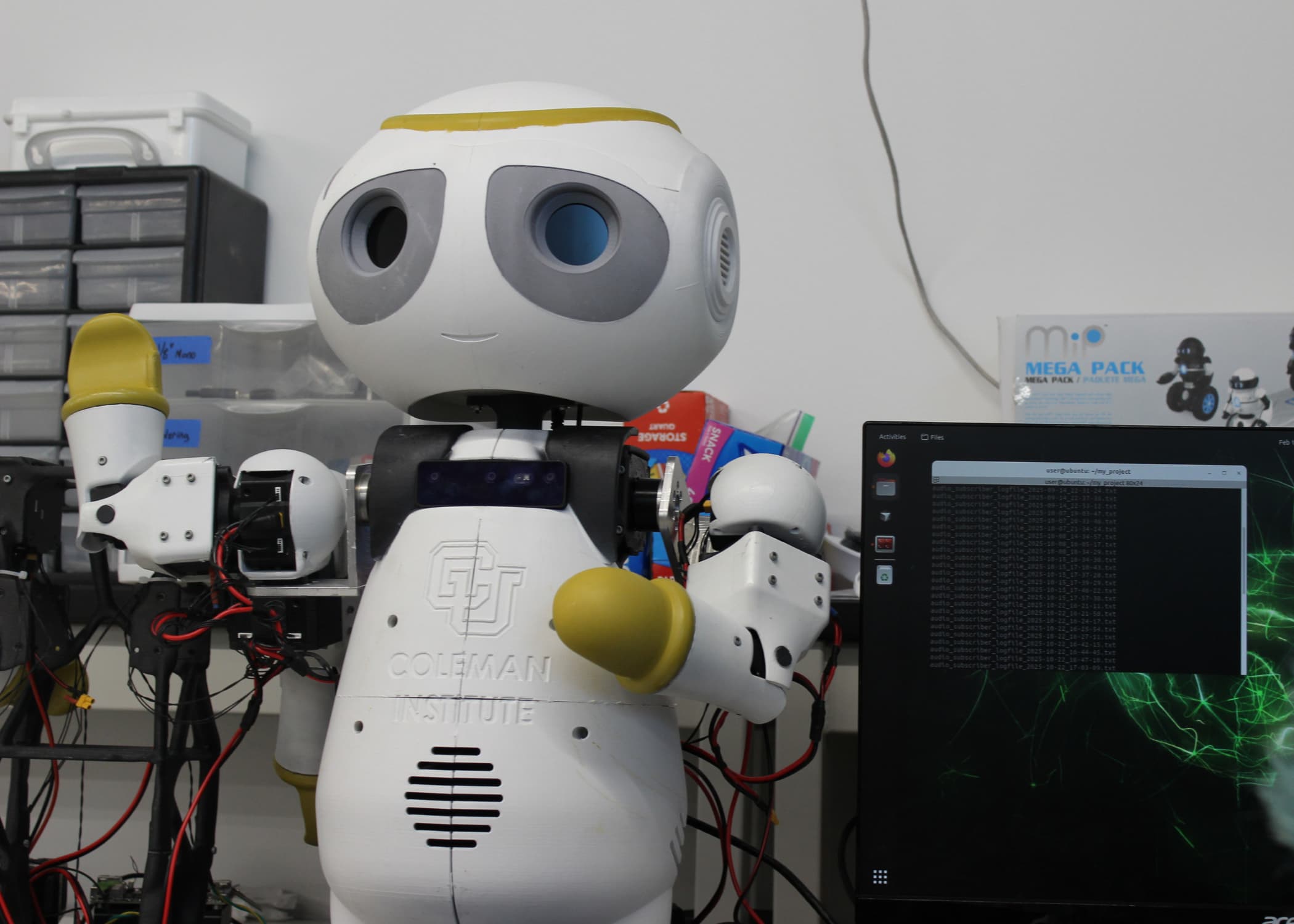
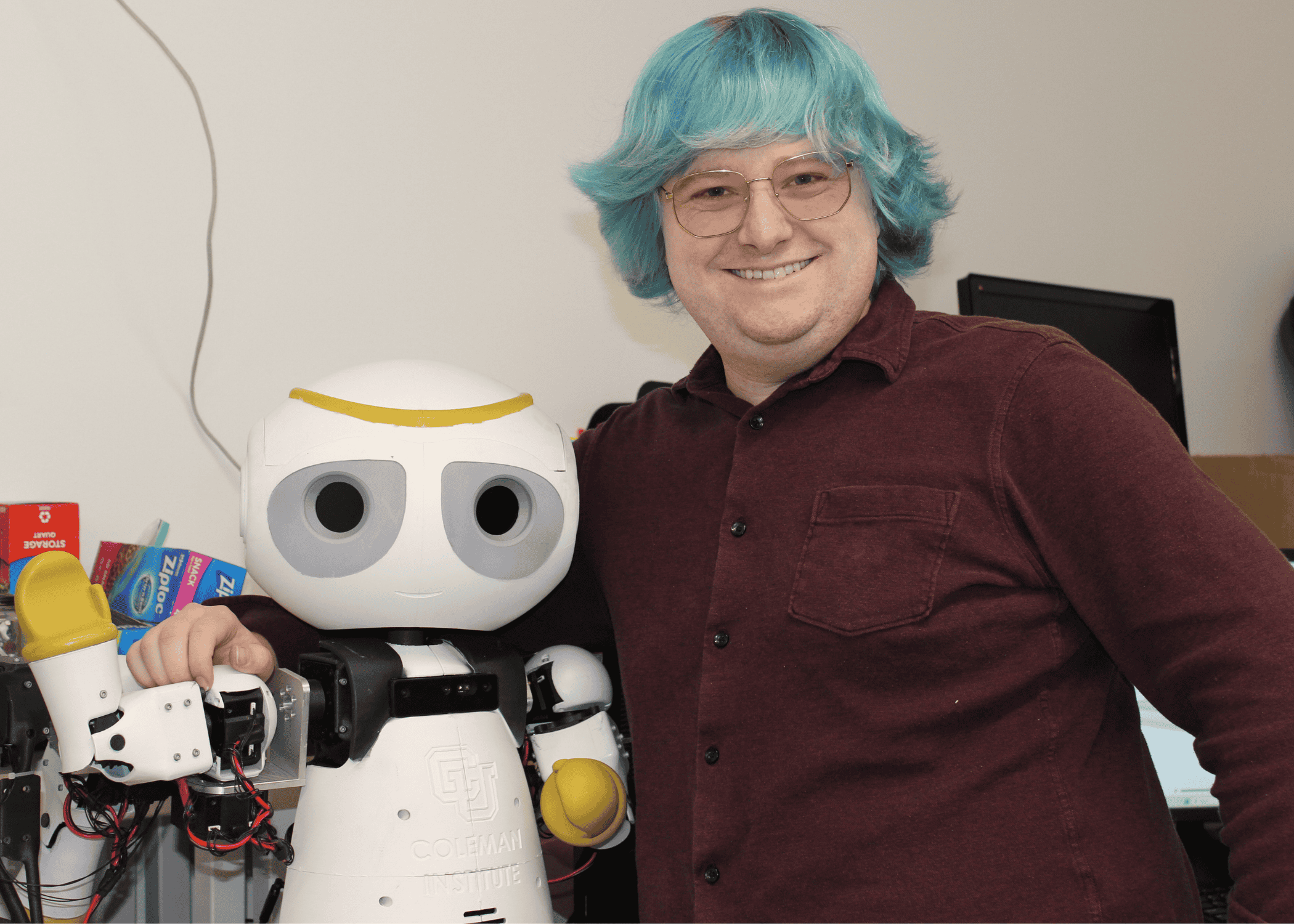
The research sits within a rapidly growing field known as social assistive robotics, where engineers design technology to support individuals recovering at home, particularly those living alone or managing disabilities. Instead of replacing human care, these systems are built to extend it; guiding therapeutic exercises, encouraging engagement, and reducing the effects of social isolation, which has been shown to carry serious health risks.
For someone healing from a stroke or surgery, the quiet hours between visits from therapists or family members can stretch long. A robot capable of subtle, human-like cues like eye contact, attention, and encouragement, can transform those moments into opportunities for progress. In that sense, the engineering behind these systems does more than perform tasks. It supports dignity, connection, and quality of life.
At the same time, Jack contributes to an augmented reality indoor navigation system designed to improve accessibility for users of all abilities.
"I also work on an AR indoor navigation project designed to help users of all abilities navigate unfamiliar spaces efficiently," he explains. "There is a fascinating overlap between AR game design and the type of solutions that reduce wandering and effort for people in new places."
By overlaying digital navigation directly onto the physical world, AR systems can guide users through hospitals, public buildings, and campuses in ways that are clearer and more accessible than traditional maps or signage.
Like much of the work happening in the lab, this is thoughtful engineering applied to everyday challenges; technology designed to meet people where they are and help them move through the world with greater ease.
In both projects, his computer engineering background becomes a powerful differentiator, with high-level computing research becoming instruments of accessibility.
"Utilizing my computer engineering background for things like data management and Segment Anything Models (SAM) in this context is incredibly rewarding," Lueck shares.
For Jack, Biomedical Engineering isn't a departure from computing. It's computing applied where it matters most. In CU Denver's MS Biomedical Engineering program, advanced computing tools become vehicles for independence, communication, and dignity.
A Master's Program Designed for Momentum
One of the defining strengths of CU Denver's master's program is its location. Based on the CU Anschutz Medical Campus, students are embedded in a collaborative research ecosystem alongside clinicians, scientists, and healthcare innovators. For Jack, that environment has been transformative.
"I cannot overstate how fantastic the faculty is here," he says. "They are incredibly hardworking and well-connected, and their support is both informed and valuable."
Mentorship at CU Denver goes beyond coursework. Faculty actively connect students with research teams and opportunities that align real-world needs with their specific technical expertise.
There is a massive amount of work to be done in this field, and the opportunity to mention a specific skill and be immediately connected with a research area looking for that talent is astonishing.
"By far the greatest benefit has been the connections and recommendations for projects and professors," Lueck explains. "There is a massive amount of work to be done in this field, and the opportunity to mention a specific skill and be immediately connected with a research area looking for that talent is astonishing."
For graduate students, that immediacy turns potential into progress. Ideas move quickly from concept to application, and students begin contributing to meaningful research almost immediately.
Designing With, Not Just For
Through the Assistive Technology Certificate, Jack has further expanded his understanding of a guiding principal at the College of Engineering, Design, and Computing: meaningful innovation must be designed with the people who use it.
"The certificate has been an excellent selection of courses emphasizing the importance of designing solutions with the people who use them," he says. "Through shadowing experiences, I have seen how the right device or setting can make a world of difference. I've learned how critical it is to follow up, monitor, and calibrate devices."
Those experiences changed how he approaches every project from the beginning.
"It has taught me to factor adjustability for a population's needs into the very onset of a design project," he says.
For someone trained to optimize systems for performance, this shift is profound. Success is no longer defined solely by efficiency or scale, but additionally, adaptability, usability, and lived experience.
Engineering the Future with Empathy
As artificial intelligence evolves and technology accelerates, Jack believes the responsibility of engineers is growing just as quickly.
"In an era defined by fast AI models and large companies, the challenge we face is ensuring we consider people, not just customers," he says. "Implementing empathy into the worlds products is very important to me, and I know I can contribute to that world here."
Through CU Denver's MS in Biomedical Engineering Jack is doing exactly that: combining technical mastery with clinical awareness and empathy-driven design.
For students ready to apply advanced engineering skills in a healthcare-centered environment, the program offers more than a degree. It offers proximity to real, life-changing impact.
And for Jack, that proximity to people, problems, and possibility is exactly where engineering belongs.
Author: Cassidy Jacoby
Get Involved!
The Center for Inclusive Design and Engineering (CIDE) at CU Denver advances assistive technology through innovative research, academic programs, and industry partnerships.
To learn about our academic opportunities, visit Academics.
For industry partnerships, visit Industry Services.
To explore additional collaboration opportunities, contact CIDE Director, Dr. Cathy Bodine.