

DIY AT Using PVC
Feb 23, 2026Did you know?
There are many adaptations for seating, positioning, communication, fine motor skills, and play that can be made from common, inexpensive materials available in most hardware stores or homes. One of the most versatile materials to use for the construction of DIY AT items is PVC, because it is readily obtainable, cheap, and easy to work with.
About PVC
PVC, or Polyvinyl Chloride, is one of the most versatile construction materials made today. It is frequently used in plumbing in houses. PVC Pipe comes in different outside diameters, from 1/2" to 4" and larger, and it is sold in 10ft lengths. In most stores where you can purchase PVC pipe, an employee of the store will cut the pipe in half for you, so that it will fit in your car. Most projects use 1/2" or 3/4" pipe, but whatever you choose, just make sure you stick with the same size for all your tube and fittings/connectors. Buying the connectors in packages of 10 is also much less expensive than buying them individually. Consider planning several projects before you go to the hardware store to save money. When purchasing fittings, make sure that they are slip fittings and not threaded on the inside.
With just a little imagination and creative thinking, you too can design a PVC project!
PVC Fitting Examples
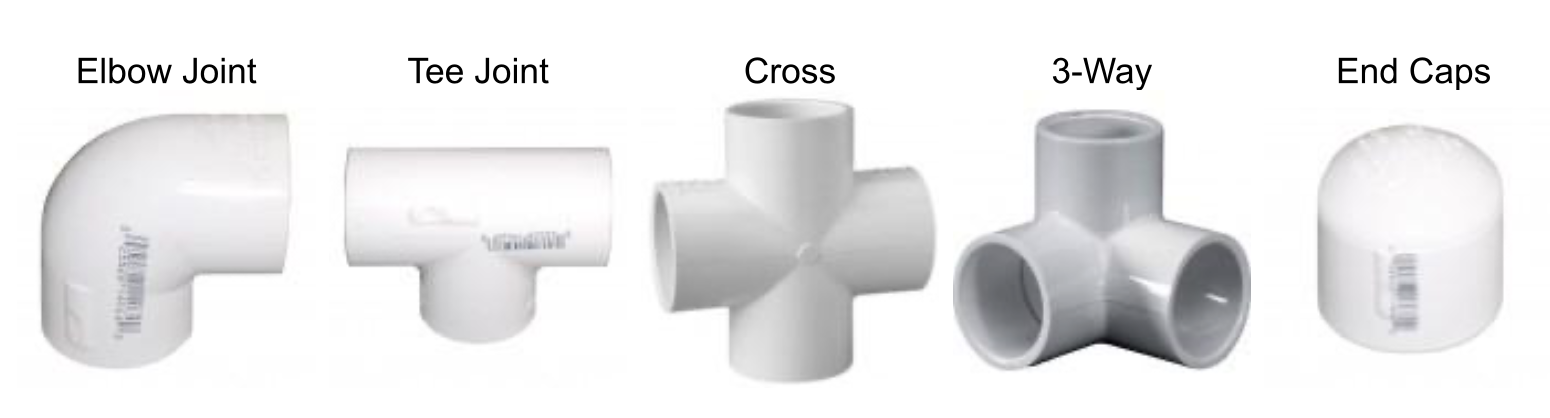
Minimum Materials Needed for a PVC Project
- PVC pipe (sizes cut to fit your project)
- Selection of fittings
- Pencil for marking lines for cutting
- Tape measure
- Special PVC ratchet pipe cutter
- PVC Cement (optional)
Planning your Project
- Make a drawing of what you want, including measurements
- Cut your pieces
- Mark each piece with a pencil to keep track
Cutting PVC Pipe
PVC pipe can be cut with a hacksaw or coping saw using a miter box so you can get a straight cut; you may also use a ratchet pipe cutter, which makes cutting the pipe even easier. If you are using a saw to cut, you will need a file to remove any burrs from the end of the pipe, so you can get a snug fit in the coupling. When using a saw to cut the PVC, you might want to have a vise grip to hold it securely while cutting.
Putting it All Together
Be sure to make a dry run with all your pieces before you cement it, and use a PVC-clear cement to put your project together permanently.
If you choose to use PVC Cement:
- Use in a VENTILATED area!
- Prepare for drips
- Plan your assembly, because once it's cemented, you can't go back
- Apply cement one joint at a time
- Coat both surfaces of the joint
- Push all the way in and twist
- Work quickly once the cement is applied!
PVC Project Ideas
Positioning and Mobility
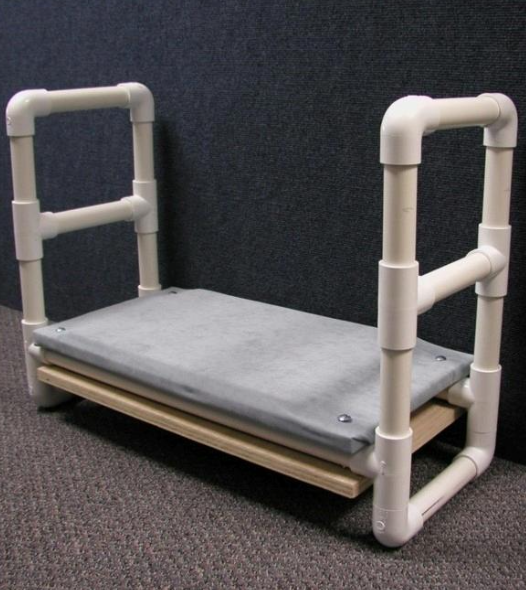
Bench
Securing rigid boards to a PVC project can make a sturdy surface at a customized height for an accessible bench or table.
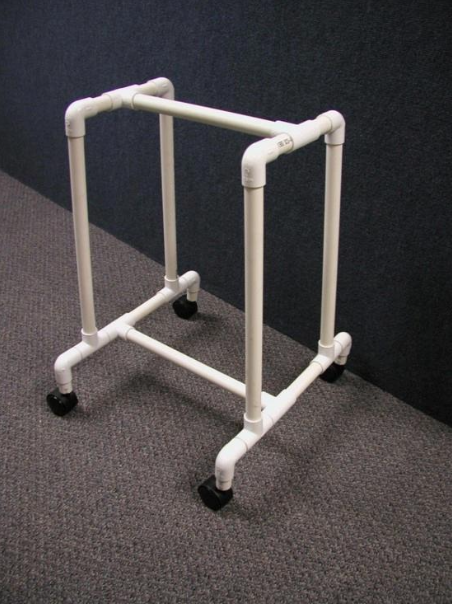
Walker
Get your little one moving by drilling holes to add caster wheels to any project.
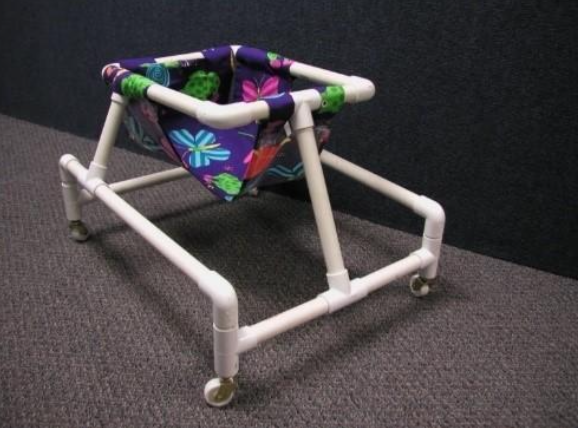
Gait Trainer
Adding a fabric sling can make a comfortable and supportive place to sit in these PVC projects. Be sure to use a thick-enough fabric and reinforced stitching to support the weight of the child.
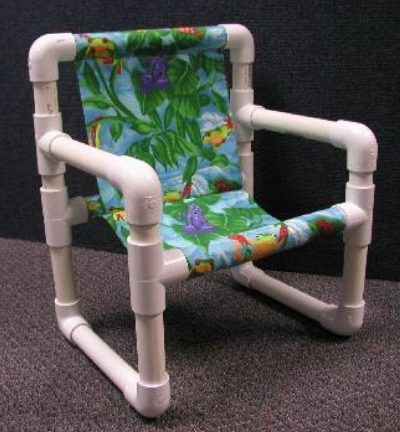
Chair
Fine Motor and Play
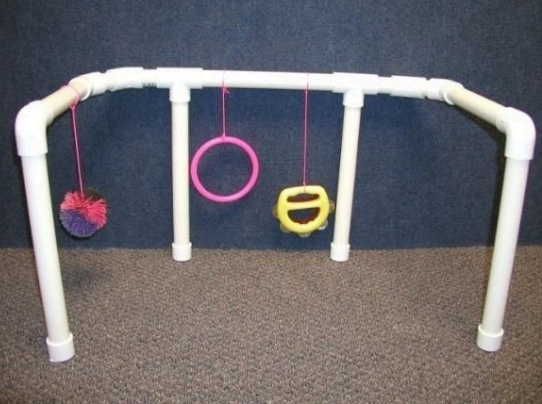
Play Gym
For children who have trouble moving around during playtime, this play gym puts multiple toys within reach and easy to play with. Secure the toys to the pipes with string or plastic linking rings, and the child can sit or lie nearby for lots of fun. Make the legs taller to accomodate a wheelchair or stroller that can be wheeled right underneath for playtime.
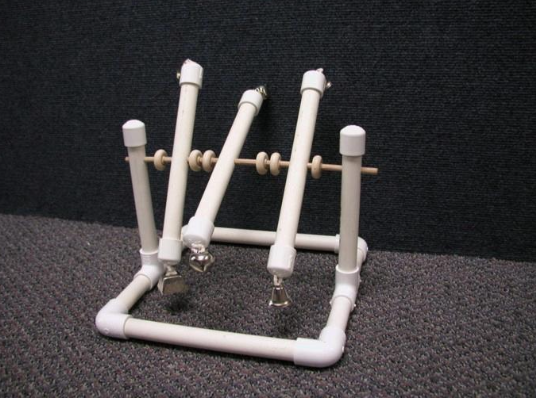
Noise Maker
Drill holes, add a wooden dowel, and attach bells or other noise-makers to make an accessible music machine. Children who have trouble gripping or holding things can still make music by spinning the tubes to make sound. The spinning tubes add an extra visual experience that some children will find calming.
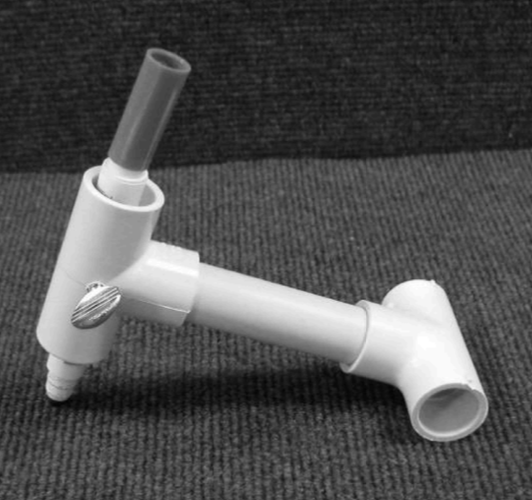
Marker Holder
This simple tool adds an easy-to-grip handle that can be used to manipulate any utensil that's held in place by the screw. Try it with a marker, pencil, fork, or paintbrush!
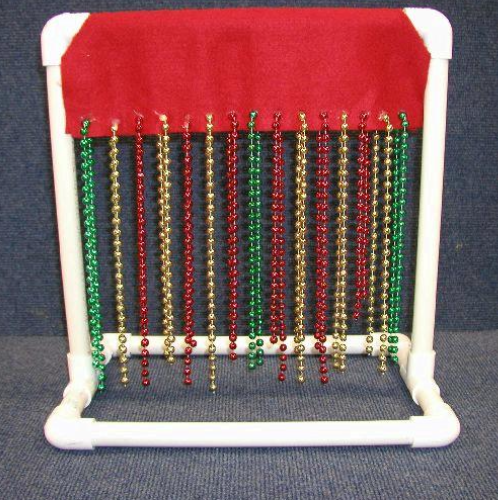
Sensory Bead Play Station
Use fabric to attach strings of beads or other sensory toys to create a hands-free sensory experience. Children can play with the sensory toy without having to use a hand to hold onto something.
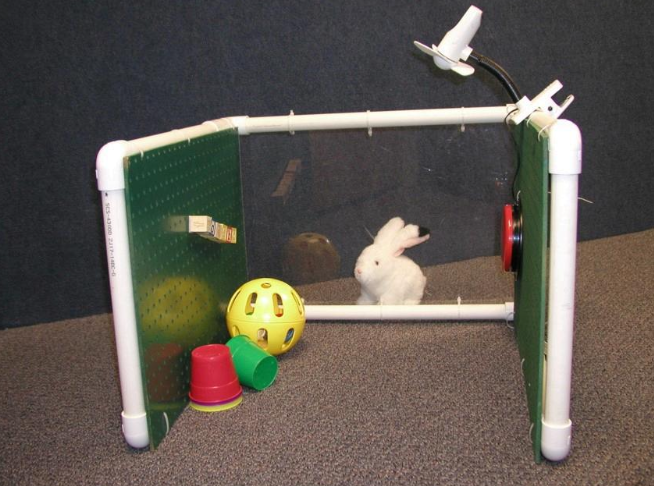
Play Cube
For children with limited mobility or vision, this is a great way to explore textures and shapes through play. Make one wall a cookie sheet or magnetic surface, one wall plastic or mirrored, and one wall soft hook-and-loop fabric to secure toys or switches with magnets, velcro, poster tack, or removable mounting strips. This allows the child to explore a variety of toys close-at-hand without having to worry about them rolling away. Add a clip fan to the top for an extra sensory experience.
Communication and Literacy
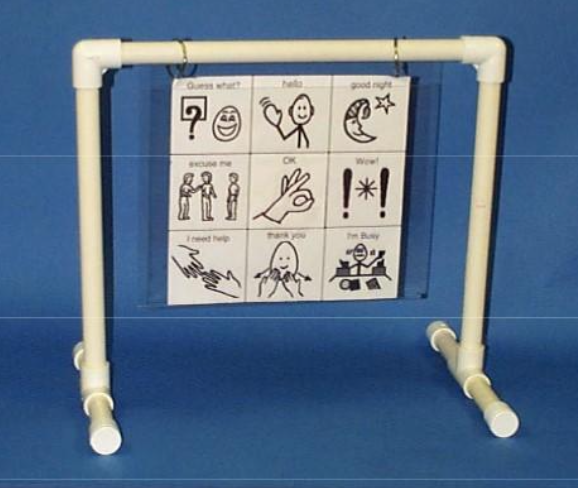
Communication Board
When a child doesn't want to carry their communication book or device with them while playing, this mount can be placed near them, so they still have communication close at hand. It also allows for communication models from adults and peers, or a hands-free solution for a low-tech eyegaze board during play in a natural setting.
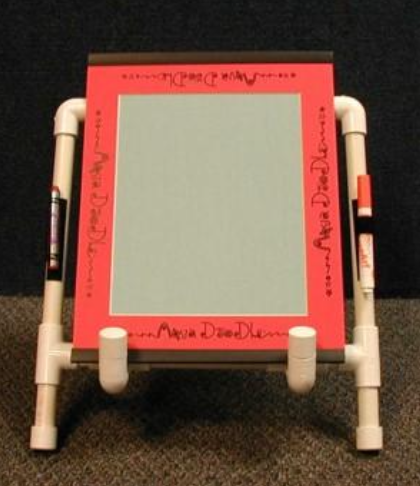
Table Easel
This easel can be used for a variety of purposes. It can hold a communication board, an art or writing project, or an open book. Try seeing how a child's engagement changes if they can look at a book hands-free or paint on a surface that's at a different angle and can be moved closer to them.
Additional Resources
- Great for plans and ideas for projects
- Order furniture-grade pipe and fittings
- Order furniture-grade pipe and fittings
https://www.candsplastics.com/
- Order furniture-grade pipe and fittings