

Shared Content Block:
directory-table class
Shared Content Block:
"Spread Out" style for numbered lists and bullet points
Welcome to Biochemistry and Molecular Genetics

Julia Promisel Cooper, Chair
As biochemists and molecular geneticists, we are in the midst of an unprecedented time of discovery - our conception of the molecular biology of cells is going from the equivalent of grainy black-and-white to high-resolution technicolor. From deciphering the choreography of transcription complexes, chromosomes and RNA molecules within cells to developing novel approaches to 3D molecular structure determination to understanding how viruses hijack a cell’s machinery and alter its metabolome, the researchers in Biochemistry and Molecular Genetics (BMG) are at the forefronts of their fields both conceptually and technologically.
Maximal synergy and depth of thinking require an open, vibrant research environment in which people of all backgrounds thrive. We are passionately devoted to enhancing diversity and upholding uncompromised equity and anti-racism. These principles, along with the close proximity of BMG to other outstanding basic and clinical departments as well as several hospitals, vastly enhance our opportunities for collaboration and translation of paradigm-shifting basic discoveries to the clinic and beyond.
Research Areas
Highlighted Recent Publications
TRF1 relies on fork reversal to prevent fragility at human telomeres
Joe Nassour Lab - July 2025 - Nature Communications
Conserved long-range interactions are required for stable folding of orthoflaviviral genomic RNA
John Janetzko & Janetzko Lab in collaboration with Puglisi lab (Stanford) – June 2025 – Nucleic Acids Research
The Bentley Lab & Hansen Lab have published a paper in Cell Reports titled "PP1/PNUTS phosphatase binds the restrictor complex and stimulates RNA Pol II transcription termination"
John Janetzko, PhD, Assistant Professor of Biochemistry and Molecular Genetics and Neil Kelleher (Northwestern University), are corresponding authors on a research article "Capillary Zone Electrophoresis-Mass Spectrometry of Intact G Protein Coupled Receptors Enables Proteoform Profiling" published March 27 in Analytical Chemistry. This study opens new opportunities for profiling the post-translational landscape of complex membrane protein samples towards a better understanding of drug action and disease pathogenesis.
T. Rajendra Kumar, PhD, Professor of Obstetrics and Gynecology, and Neelanjan Mukherjee, PhD, Assistant Professor of Biochemistry and Molecular Genetics, are corresponding authors of a research article, “Identification of FSH-regulated and estrous stage-specific transcriptional networks in mouse ovaries,” published February 10 by the Proceedings of the National Academy of Sciences. The study may eventually allow researchers to identify potential targets for fertility enhancement or blockade in women. Four co-authors are from our campus.
Expanding the tagging toolbox for visualizing translation live
Ning Zhao Lab - February 2025 - Biochemical Journal
Redundant pathways for removal of defective RNA polymerase II complexes at a promoter-proximal pause checkpoint
Nova Fong & Bentley Lab - January 2025 - Molecular Cell
Nucleation and spreading maintain Polycomb domains every cell cycle
Giovana Veronezi & Ramachandran Lab – April 2024 – Cell Reports
Multiomics Signatures of Coagulopathy in a Polytrauma Swine Model Contrasted with Severe Multisystem Injured Patients
Ian LaCroix, Angelo D’Alessandro, & Hansen Lab - February 2024 - Journal of Proteome Research
Differential subcellular localization of ASPM RNA and protein
Hei-Yong Grant Lo, Matthew Taliaferro, & Taliaferro Lab - January 2024 - MicroPublication Biology
Synonymous codon usage regulates translation initiation
Chloe Barrington & Rissland Lab – December 2023 – Cell Reports
The role of midbody-associated mRNAs in regulating abscission
Katie Vaeth & Prekeris & Taliaferro Labs – December 2023 – Journal of Cell Biology
Small-molecule Ro-08-2750 interacts with many RNA-binding proteins and elicits MUSASHI2-independent phenotypes
Kathryn Walters & Mukherjee Lab – October 2023 - RNA
Compromised nonsense-mediated RNA decay results in truncated RNA-binding protein production upon DUX4 expression
Amy Campbell & Jagannathan Lab – June 2023 – Cell Reports
More Information
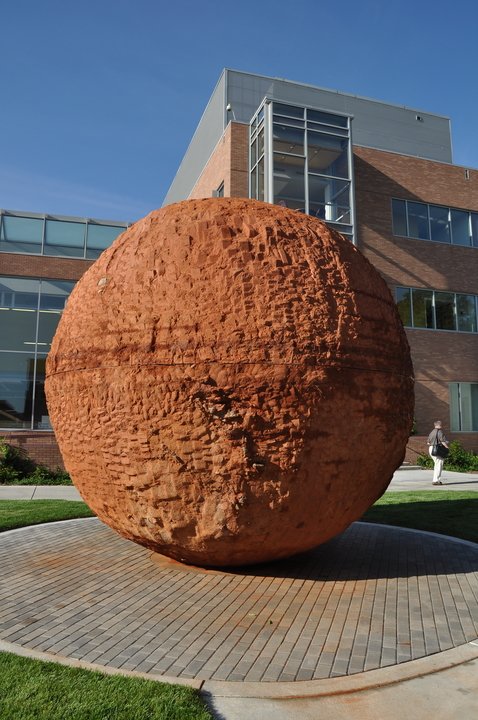
.jpg?sfvrsn=4edad9b9_0 "Outdoor sculpture fall")

News Announcements
Congratulations to all recent faculty, postdoc, and graduate student awardees!
 | July 2025 Edward Evans (DeGregori Lab) has received an Edward P. Evans Foundation Young Investigator Award! |
 | July 2025 Jay Hesselberth has received a State of CO OEDIT award! |
 | July 2025 Pragyan Singh (Jagannathan Lab) has received an FSHD Society Award! |
 | July 2025 Joe Nassour has received an American Federation for Aging Research Grant for Junior Faculty! |
 | June 2025 James DeGregori has received a Cancer League of Colorado 2025 Research Grant! |
 | June 2025 John Janetzko has received an NIH R00 Award. Congratulations! |
 | May 2025 Elan Eisenmesser has received an NIH R01 Award! |
 | May 2025 Beat Vogeli has received an NIH MIRA Award! |
 | April 2025 Rui Zhao has received an NIH R21. Congratulations! |
| April 2025 Joe Nassour has received an ACS-IRG award. Congratulations!
|
| March 2025 Elan Eisenmesser has received an NIH R21! |
 | March 2025 James DeGregori has received an NIH R01!
|
 | February 2025 Cat Musselman received the Presidential Early Carrer Award for Scientists and Engineers. The award is the highest honor bestowed by the U.S. government on outstanding scientists and engineers early in their careers. |
| February 2025 Parker Nichols, alumnus of the Vogeli lab, received a 2025 CU Anschutz Research Award for Trainee Research Excellence!
| |
 | February 2025 David Bentley received a 2025 CU Anschutz Research Award for the Chancellor's Distinguished Research Lectureship! |
 | January 2025 Suja Jagannathan has received an NIH MIRA renewal award! |
| » More News |