


$55M in external funding
Research
Research Funding Updates
Since the Trump administration took office on January 20, 2025, the administration has released numerous executive orders and memos that could impact the funding and operation of research at the Colorado School of Public Health. As a school, we are keeping a close eye on these developments as they continue to evolve on a daily basis.
The purpose of this webpage is to provide updates, resources, and guidance to researchers at the school of public health. We will provide information as it becomes available on the impacts of the new administration’s policies on public health-related research with a focus on the research areas and sponsors that are particularly relevant to our school community.
Please check back as we assess and provide updates as needed.
Updates As of Wednesday, February 19, 2025:
- Establishment of the Make America Healthy Again Commission
- Check out the latest ASPPH Message Guide
Updates As of Monday, February 10, 2025:
The National Institutes of Health (NIH) announced the implementation of a standard indirect cost rate of 15% across every new and existing NIH Grant for all institutions.
This issue continues to evolve and our resource pages will continue to be updated.
- CU Anschutz Federal Transition Updates
- University Federal Team Updates
- Colorado School of Public Health || Office of Research
Please reference the full email sent from Chancellor Don Elliman. If you have any questions, please do not hesitate to reach out to the Colorado School of Public Health Office of Research.
Updates As of Friday, February 7, 2025:
We have a few important messages to share with the research community.
- Continue to pursue your research unless specific directions were provided to stop by your sponsor.
- If you have received any direct communication relating to your grants, including a stop order, please complete the linked form to consult with the CU Anschutz Federal Transition Team.
- Notify the CU Anschutz Federal Transition Team immediately of any attestation requests and do not sign any forms without guidance from the Central University Office.
- Each situation will be reviewed on a case-by-case basis by the CU Anschutz Federal Transition Team.
- Be mindful of the rapidly changing landscape of grant funding and exercise caution about significant financial commitments relating to your grant.
Please reference the recent email sent from Dr. Thomas Flaig and the Vice Chancellor's Office for Research. If you have any questions, please do not hesitate to reach out to the Colorado School of Public Health Office of Research.
Guidance for Public Health Faculty and Research Staff
1. Continue working on grants currently under review. Assume you will have to rewrite and resubmit grants that are currently under review, especially if they were targeted toward priorities that are no longer in place.
2. Write grants with your new audience in mind. As part of grantsmanship, we shape our research to match the interests of the funder.
3. Pay attention to new funding opportunities. Grant funds are likely to shift from one agency to another. For example, about 15 years ago, the Department of Defense had a large portfolio of cancer research. We will most likely see similar shifts to agencies that come into favor that will be newly charged with health-focused research. As a School, we plan to stay abreast of these shifts and share this information with you.
4. Diversify your grant portfolio. This is valuable advice regardless of the funding climate. Try to have a mix of foundations, federal, and state funds.
5. PI's and grant personnel, you are encouraged to submit and pay invoices in a timely manner as we do not know under what conditions grants/contracts will continue.
6. Continue your work on your active federal grants as normal, unless you receive a cease-and-desist, stop-work order or other communication directly from a federal agency. In such instances, reach out immediately to the Office of Grants and Contracts and Dana Dabelea for additional guidance on how to proceed.
Contact Information
If you need specific guidance on your research, contact your department chair or Associate Dean for Research, Dana Dabelea:
- Department of Biostatistics & Informatics: Nichole Carlson
- Department of Community & Behavioral Health: Jenn Leiferman
- Department of Environmental & Occupational Health: Beth Carlton
- Department of Epidemiology: Jill Norris
- Department of Health Systems, Management & Policy: Glen Mays
Our team
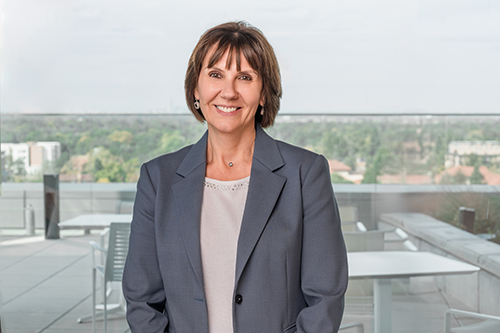
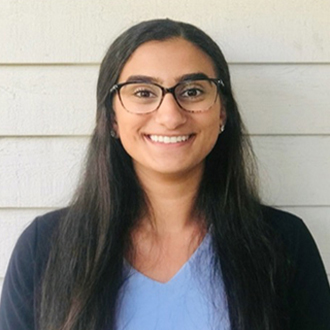
Dana Dabelea MD, PhD
Associate Dean of Research, Conrad M. Riley Distinguished Professor, Director (LEAD Center)

Our focus
Our faculty and students conduct research on population-level disease prevention, health promotion, health policy, and more. We have a tradition of excellence in research and the application of that knowledge through public health practice and service. Our experienced faculty share their research with community leaders, policymakers, and fellow researchers to better inform the public, respond to emergencies, and provide counsel on emerging health issues facing communities.
Our research- and practice-focused centers specialize in a wide range of important public health topics—including diabetes epidemiology, cancer prevention, and statistical consulting—and are nationally, if not internationally, recognized for
their work. Our Center for Global Health is the only World Health Organization Collaborating Center for Promoting Family and Child Health in the Americas. We’re also home to nationally-funded research centers including the Colorado Integrated
Food Safety Center of Excellence, one of six centers of its kind funded by the Centers for Disease Control & Prevention (CDC); Rocky Mountain Public Health Training Center, one of 10 centers funded by the Health Resources and Services Administration
Agency; and the Center for Health, Work & Environment (one of 10 centers of its kind funded by the CDC).
Quick facts
600+ publications
(18% increase from 2021)Top 20 in NIH funding for SPHs
Featured projects
The Program Management Office for the NHSPI is based at ColoradoSPH. The team studies health system readiness and community preparedness for
large-scale emergencies and hazardous events, tracking progress at
national, state, and local levels across the U.S.
The Carlton Research Group uses multi-disciplinary approaches to understand the ways in which social and environmental conditions—from climate change to urbanization—impact infectious diseases. They focus on both emerging infectious disease threats and infectious diseases on the edge of elimination.
Resources

Colorado School of Public Health
CU Anschutz
Fitzsimons Building
13001 East 17th Place
3rd Floor
Mail Stop B119
Aurora, CO 80045
CMS Login