Sign In
 

Profiles

Meet our Current Students, Graduates, and Preceptors


Making a Difference One Person at a Time

"To the world you may be one person, but to the one person you may be the world.” This quote provided comfort to Kevin Bogart, a 2010 graduate, as he traveled to Kenya during his third year as a CHA/PA student. He spent a clinical rotation working in a private rural hospital and a government hospital. Ninety percent of patients he worked with were infected with AIDS and suffered the complications of the disease, such as Pneumocystis Pneumonia, Cryptococcal Meningitis, Kaposi’s Sarmoca, Tuberculosis, and Malaria. The small medical facilities could not manage the ballooning number of patients, thus very sick patients would lay head to toe sharing twin beds.

At times he struggled to handle the severity of the medical situation he was faced with. A gentleman passed away in a crowded medical ward and the only sign of his passing was the wailing of his family. Medical personnel did not rush over; rather they kept working with the surviving patients. Death is so common, and there were other patients to save. Kevin was shocked as severely ill patients were discharged from the hospital. A western-trained Kenyan doctor noted Kevin’s reaction and provided perspective, “The patient is stable and we need beds for other sick patients.”

Kevin was only one of three European “Mzungu’s” whom he met over the three months he spent in Kenya. He walked by an orphanage every day on his way to the hospital, and just the sight of a “Mzungu” would interrupt classes as kids would scream out to him. Kevin met so many remarkable children and adults during his stay. One person of note was American Dr. John Ott who has lived and worked in Kenya for years. He became a father to numerous orphans, an ever growing problem in Kenya with over 11.6 million children orphaned by AIDS. Kevin was also touched by the community’s reaction to the orphan crisis – most families had taken in nieces, nephews, and neighbors.

Facing such overwhelming difficulties, Kevin noted, “you either close off to the world around you or you become involved and take care of the community around you." He anticipated before arriving in Kenya that he would face poverty and disease on a level he’d never seen before, which was true.  Yet, he also was pleasantly surprised by the resilience and happiness of the Kenyan people in the face of such adversities. The people were not focused on what they didn’t have, but rather on what they did. They found great pleasure in simple things such as singing while doing laundry or dancing when no one was watching.

Kevin has been able to use all he learned in Kenya as a PA at a primary care clinic at the Denver Health campus. His practice primarily serves urban underserved and uninsured patients. With a large immigrant patient population, he has conducted medical interviews in over fifteen different languages. Many patients have not had medical care for decades, and some immigrants have never seen a medical provider in their lives.  Kevin finds working with this population extremely rewarding. He continues to find inspiration in that he cannot change the world alone, but he can impact the lives of individuals.


Kimberly Cray.jpg
A Graduate's Life in Alaska 

“You must be crazy!  I do not belong in Alaska.”  This was Kimberly Cray’s initial response to a suggestion by a friend that she consider working in Alaska after graduation.  Kimberly knew she wanted to leave her comfort zone and have an adventure after she graduated in May 2011.  After researching Alaska, specifically Unalaska, Kimberly realized that she had found the right destination.  Unalaska, which includes Unalaska Island and Amaknak Island, is 800 miles west of Anchorage and can only be accessed by boat or plane.  It is 110 square miles, with only a small portion of that land being developed and inhabited, and offers only 6 miles of paved roads.  As the largest fisheries port in the U.S. by volume of seafood caught, the local population includes 4000 residents that increases to 7000 during the busiest fishing seasons. 
Four months into her arrival in Alaska, Kimberly is having the experience of a lifetime.  In a typical day, she may treat a simple cold, a large fish hook impaled in someone’s hand, a heart attack, and hypothermia.   Oftentimes, patients must be medevacked off the island.  “Being able to practice pediatrics, family practice, urgent and emergency care all in one place (usually all in one day!) is truly a unique situation, especially for a recent graduate,” she notes.  Occasionally, Kimberly's position requires venturing into animal medicine.  With no full time veterinarian on the island, residents are forced to bring in their pets, mostly dogs, when crisis arises.  The clinic does the best they can to treat them and consults with a veterinarian in Anchorage as needed. 
Kimberly is pleasantly surprised at the number of great friends she has made so far in her community.  Unalaska attracts people from all around the world – Japan, Russia, Philippines, and the Lower 48.  With patients from all around the world, Kimberly is challenged to overcome many language and cultural barriers.  She feels it is very important to relate to patients on a personal level so that she can better treat them.  Life is Alaska is not without its challenges.  Kimberly has had to adjust to living in one of the rainiest places in the U.S.  The weather, number of daylight hours, and isolation can lead to “island fever.” 
All in all, Kimberly is growing and changing in a remote spot in Alaska.  She observes, “working with my patients and collagues has reinforced in my mind why I wanted to become a PA in the first place, and that is to help people.”  Want to hear more about Kimberly's experience in Alaska?  Follow Kimberly’s blog at: www.adventureunalaska.blogspot.com/


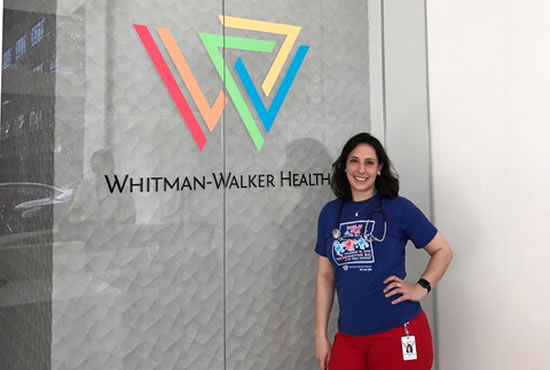
Perry, Eleanor 31.jpgA Third Year Student's Perspective

Eleanor Perry is a 5th generation Coloradoan who grew up in a small town on a Herford ranch in Carbondale.  She spent much of her formative years outdoors enjoying kayaking, skiing, sledding, and backpacking.  As a Cell & Molecular Biology major at Fort Lewis College in Durango, Eleanor initially planned on attending medical school. She learned of the physician assistant profession her junior year and changed gears. She considers choosing the PA profession the best decision she has ever made. 

Eleanor is in the midst of her third year at CHA/PA, rotating to a new rotation each month in various settings from hospitals to rural family practices. CHA/PA is uniq​ue in that it offers a full third year of clinical experience, rather than a two year program. She has found that working in such diverse settings has given her a broad perspective on how providers treat the variety of patients that walk in their doors. “Every month has provided me with a different set of skills and new knowledge.  All of this will only make me a better physician assistant,” she notes.  While rotations can be challenging in the fast pace and knowledge they require, rotations do afford students the opportunity to explore various fields of medicine. For Eleanor, this exposure has helped her find her passion. She has spent two rotations in hospitalist settings, a field that she wasn’t even aware of until her 3rd year at CHA/PA. Hospitalists provide medical care to acutely ill hospitalized patients.  Eleanor loves the team aspect of hospitalists as well as working with complicated patients to whom she can provide complete patient care.  

Eleanor is approaching her May graduation feeling a combination of excitement and apprehension. Leaving three years of structured life is intimidating, but she is excited to pursue her passions and hopefully find a hospitalist position after graduation.


Englund crop.jpgA Graduate Gives Back to CHA/PA Through Precepting

Brian Englund became interested in the PA profession while working in Radiology at The Children’s Hospital.  His passion was always working with children, and he decided at that time that he wanted to do more and be more.  Brian reenrolled in college, and ultimately was admitted to the Class of ’97 at CHA/PA. Brian has been a Pediatric PA at Greenwood Pediatrics for over 14 years, where he currently precepts 24-28 students each year.  He had some great preceptors as a student, which drove him toward precepting after graduation. He is passionate about being the best teacher he can, and to help the students see the need for preceptors in the PA profession.

Brian strongly believes that a great preceptor is defined by three important tools.  The first is to educate the students, which requires staying current on new medical topics and teaching methods.   Secondly, preceptors must observe.  Students need to be viewed in action so that they can be provided with insight into their performance of exams and patient interaction.  Lastly, feedback is essential to the students’ growth.  They need to know what makes them intriguing PA’s, so they can try to reproduce those moments of brilliance. 

Preceptors are a crucial component of the PA program at CHA/PA.  Precepting is a way of giving back and sowing into the next generation of PA’s.  Providers (PA/MD/DO/NP) can earn Continuing Medical Education hours and the opportunity to become Clinical Faculty at the University of Colorado.  Contact David Eckhardt, one of our Clinical Coordinators, if you would like more information on precepting with CHA/PA: David.Eckhardt@ucdenver or 303-724-1347.


Combining Law and Medicine to Benefit Multiple Sclerosis Patients


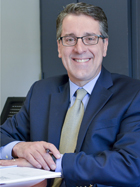
Tom-Stewart 1inch.jpgThomas Stewart hopes his patients and clients perceive him as a “trusted resource who will work diligently to see that they receive top-quality care.”  As a CHA/PA program graduate (Class of '99), Thomas has had the opportunity to weave together his previous career as a lawyer with his interest in medicine.   He has utilized his medical training to benefit individuals with Multiple Sclerosis.  Thomas practices at Metro Community Provider’s Network, where he created a care model for people with MS who are uninsured or underinsured.

Thomas’ passion for those dealing with MS includes tackling the federal disability application process.  MS sufferers deal not only with the symptoms of MS itself, but also the common ramifications of the disease such as loss of income, loss of access to care, and at times, homelessness.  Nationally, only 35% of disability claims result in the award of benefits.  Thomas works closely with clinicians and specialists to provide the necessary medical base to his clients to increase those odds to 90%.

Additionally, he finds time to collaborate with community-based neurologists and researchers to conduct clinical trials.  One of which involves an agent intended to promote remyelination, and possibly axonal growth.  These developments would profoundly affect those with MS and other neurological diseases.   We are grateful that Thomas Stewart chose the PA profession and graduated from our program, and we are confident that MS patients feel the same.


A Student's Passion for the Hispanic Community

Veronica Carrillo is part of the Class of 2014. As one of four children, she grew up in Lamar, CO by parents who were born in Mexico and immigrated to the U.S. in their early teens. Veronica is the first person in her family to receive a four-year degree, so her family is extremely proud of her for pursuing her Master’s through CHA/PA. Veronica’s interest in the medical profession began when her sister was born while Veronica was a teenager. Being part of the doctor’s visits with her Mother throughout the pregnancy peeked her interest in the type of work and care health professionals offer. Veronica is very close to her younger sister, and this relationship drives her to become the type of PA that will have a positive impact on the lives of expectant mothers and their children.

While pursuing her undergraduate degree in Biology at CU Colorado Springs, Veronica initially planned on going to medical school. In her junior year, she was exposed to the Physician Assistant profession and realized that it was a better fit. Her adjustment to the CHA/PA program has been a challenge after a year break from school. Yet, she truly enjoys the program due of the atmosphere the faculty and staff create. Everyone is encouraging and helpful, wanting all students to succeed.

Veronica is excited for what the future holds. She is making lifelong friends and colleagues during her time at CHA/PA, and she looks forward to having the opportunity to be a role model for others upon graduation. She specifically would like to focus attention on the Hispanic community, encouraging a healthy lifestyle and higher education.


​Costa Rica's Impact on a CHA/PA Studentsarah wong.jpg

Hola Como esta?  Thankfully my vocabulary is no longer comprised of just these phrases after spending 4 weeks overseas. This summer a few of us second year CHA/PA’s joined with MD and NP students for a Spanish immersion experience in Costa Rica.  Along with improving our Spanish we learned how to become more culturally competent as future healthcare providers.  Mornings were spent in Spanish class and the afternoons were spent in various locations teaching and performing well child checks.  In groups we gave lectures within the community on child development, substance abuse and sex education. 

My best memories are with my host family.  They were extremely hospitable and gracious to speak slow and teach me about their culture and lifestyle.  We often had salsa dancing parties in the living room! Even though I wasn’t able to express myself verbally all the time, I realized that sometimes the best communication involves action accompanied with a smile of understanding.  I hope that this carries over to my practice as a future PA!​

Sarah Wong, Class of 2013