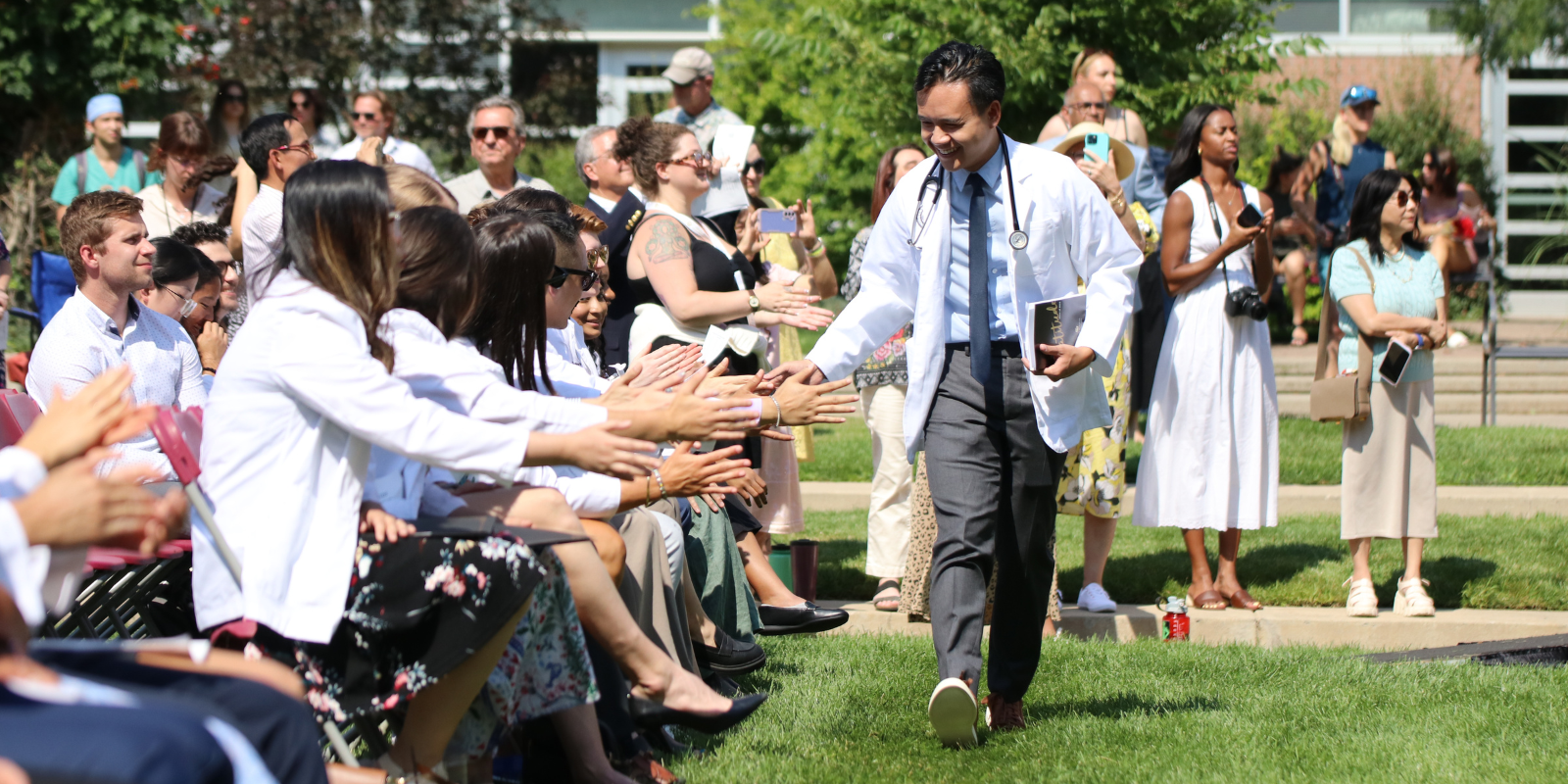
Andrew
Eitel grew up watching his father study at the dining room table as he
earned degrees and moved between careers - from the Army and an MBA, to a
law degree and finally a medical degree.
The best part, Eitel remembers, were the medical study years when ”he
brought home bones and organs, all that kind of stuff to look at.”
Medicine, Eitel felt, was his future - once he got through The Julliard School in New York.
“My grandparents had an old upright, and you
know how most kids just bang on pianos? I was always there, barely
touching, just discovering it. And my parents thought ‘What is going on
here?’ So they put me through lessons, and it sort of took off from
there.”
Sort of took off like playing concert piano in the Lincoln Center.
“I chose music first just to get in the practice hours. I thought that
maybe if I did medical school first I’d never have time to train my
fingers.
“It was quite a ride. I played for huge audiences and I just loved it.
There’s something about getting out there on stage with all the lights
on you. You have no idea how it’s going to go up until the very moment
you start. What hits you is you have to be absolutely present and in the
moment. “
Sometimes audience members would come back stage after a concert.
“You’d get someone who would say ‘I drove in from out of state and heard
about this free concert so I came. I’m going through a really tough
time in my life but your music really spoke to me.’ That’s what it is
all about, that therapeutic aspect.
“That’s one of the reasons you go to med school, too.”
The idea of medicine was never far from his mind.
While helping his father set up a psychiatric practice in West Virginia,
Eitel, now 25, got to know the patients, most of whom were poor and
medically underserved.
“That experience was pivotal for me.”
Compounding that influence was a diagnosis of type 1 diabetes while he was still at Julliard.
“Obviously that changed the game for me,” he
says. “To have your blood sugar get low on stage and your fingers start
shaking makes you figure things out pretty fast. You have to work
through it.”
Meeting other patients and spending time with doctors while he adapted to the diagnosis also affected him.
“It was an awakening for me of what’s out there and all the wonderful things we can do now.”
While waiting to get into medical school he began teaching piano in Colorado Springs where his parents now live.
“It’s similar to medicine. I could look at
people’s hands and see why this one is injured here, and why that one
gets fatigued when he plays. You have to figure out the right
mechanics.”
He intends to combine a musician’s life with medicine.
But as for career switches, he doesn’t see following his dad’s multi-career footsteps.
“I think I’ll stop at two,” he says.