




NEWSROOM
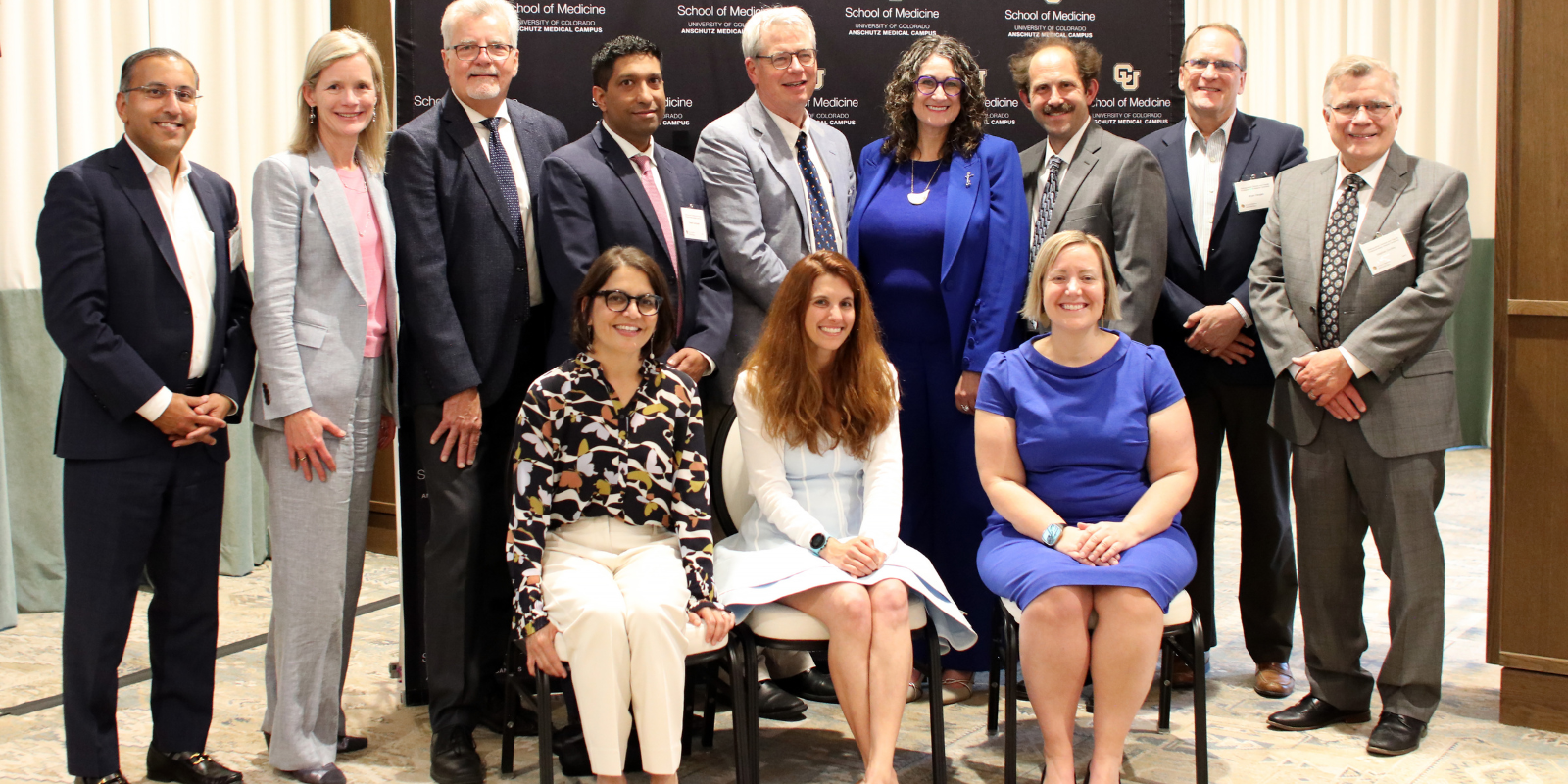
Sarah Nagle-Yang, MD and Emily Hemendinger, LCSW, MPH Among 10 CU School of Medicine Clinicians Honored for Promoting Patient-Centered Culture
Jun 23, 2025
One Tail, Two Minds - A New Approach to OCD Treatment
May 23, 2025How a masters level clinician at CU Anschutz and her trained therapy dog are advancing exposure treatment for OCD patients

Honoring Sandy Hook 12 Years Later
Dec 10, 2024December 14th marks 12 years since the tragic shooting at Sandy Hook Elementary School. At the Brain and Behavior Innovation Center (BBICEN) at the Department of Psychiatry, in collaboration with the Avielle Initiative and the Jeremy Richman Brain Health Research Endowed Fellowship Fund...
Welcome to the Department of Psychiatry
The Department of Psychiatry is a wide-ranging community of staff and faculty dedicated to our mission. It is comprised of over 300 regular, affiliate, and volunteer clinical faculty, working at the CU Anschutz Medical Campus, UCHealth/University of Colorado Hospital, Children’s Hospital Colorado, Denver Health Medical Center, and the VA Medical Center, as well as at the Department of Corrections and the Colorado Mental Health Institutes at Pueblo & Ft. Logan. Currently, the general adult psychiatry residency is ACGME accredited for 45 positions, the child and adolescent psychiatry residency is ACGME accredited for 14 positions, the addiction psychiatry fellowship is ACGME accredited for 3 positions, the consult-liaison psychiatry fellowship is ACGME accredited for 3 positions and the forensic psychiatry fellowship is ACGME accredited for 4 positions. The department is dedicated to serving a community in which we value all people and have a continued commitment to this goal in our clinical, research, treatment and educational activities.
Dr. Neill Epperson
Chair, Department of Psychiatry
Our Vision
The CU Department of Psychiatry sets the standard for Education and Training of leaders in psychiatry and mental health care, conducts ground-breaking Research that aims to eradicate suffering due to psychiatric and substance use disorders, provides ready access to state of-the-art mental health preventions and interventions across the continuum of care, and collaborates with the community and other key stakeholders to promote well-being among all Coloradans. We accomplish this vision in a manner that respects, values and advocates for the dignity and worth of each individual and family.
Our Mission
Core Mission: We provide a safe, accessible, and engaging environment for trainees, faculty, staff, and patients. We bridge the gaps of race, ethnicity, sexual orientation, age, gender, gender identity, ability status, religion, political beliefs, socioeconomic status and any other factors related to systemic oppression by trusting and honoring each other and our differences. Our Department promotes unbiased recruitment of qualified individuals from diverse backgrounds in all mission areas. We focus on retention, career advancement and promotion through empowering individuals and creating an environment that facilitates continuous growth and success.
Education and Training Mission: Through our educational programs, we train medical students, graduate students, residents, psychology interns, fellows, and practicing health care professionals to be future leaders in mental health and behavioral health disciplines. We train leaders who recognize and work to eradicate health inequities that weaken families and communities.
Research Mission: Our interdisciplinary research programs produce new knowledge regarding the causes of mental illness and substance use disorders as well as the psychosocial, behavioral and sociocultural aspects of physical and mental health conditions. We identify, develop, and implement new, early prevention strategies and novel interventions to improve the lives of all human beings. We seek to be rigorous and accessible in all of our scientific endeavors.
Clinical Care Mission: Through state-of-the-art clinical services, we deliver a full range of mental health and behavioral health interventions for patients and their families. These include neurobehavioral assessments, psychotherapy, behavioral change and health promotion strategies, neuromodulation and psychopharmacology services that recognize the wealth of cultural knowledge on how social contexts impact physical and psychological well-being.
Community and Advocacy Mission: We work with our local communities, affiliated institutions, and state and federal government agencies to promote strategies for increasing mental health awareness, reducing stigma, identifying and eliminating health disparities, and standing against discrimination and harassment to all members in our community.