Sign In
 

Child Neurology - Residency/Fellowship Programs


View from Denver's City Park
 
Residency Program Overview
Scope of Clinical Training
Supervision
Education Conferences
Application Process
 
 
Overview
Pediatric Epilepsy Program - Scope of clinical Training
How to Apply

PEDIATRIC NEUROPSYCHOLOGY RESIDENCY

PROGRAM OVERVIEW

The University of Colorado-Denver/ Children’s Hospital Colorado is offering one postdoctoral residency position in Pediatric Neuropsychology beginning September 2013. This program is administratively run by the Division of Neurology in the Department of Pediatrics with rotations through the Department of Physical Medicine and Rehabilitation. This two-year program is designed to provide training experiences consistent with INS-APA Division 40 and Houston Conference guidelines and is a member of the Association of Postdoctoral Programs in Clinical Neuropsychology (APPCN). The goal of the program is to provide a broad range of clinical experiences, preparing the individual for board certification in clinical neuropsychology through ABPP/ ABCN and a career in pediatric neuropsychology.

Children’s Hospital Colorado is the largest pediatric hospital in Colorado, and one of the largest in the Western United States. The Division of Neurology has programs in epilepsy, movement disorders, muscular dystrophies, metabolic diseases, headache, and stroke. Children’s Hospital Colorado is a Level I trauma center and serves children over the entire Rocky Mountain region, with a catchment area encompassing seven states. Neuropsychology services are provided both through the Division of Neurology and the Department of Physical Medicine and Rehabilitation (PM&R), and the resident will have the opportunity to work in both settings. In total, there are 10 pediatric neuropsychologists, 6 of whom are board-certified by ABPP/ABCN.

Resident will have the opportunity to work with children from diverse racial and ethnic backgrounds, and will see children with a wide range of medical diagnoses, including epilepsy, stroke, childhood cancers, neurofibromatosis, tuberous sclerosis, metabolic disorders, spina bifida, and mild to severe traumatic brain injury. Residents will also participate in multi-disciplinary clinics.  Many of our referrals relate to diagnostic concerns and educational planning, and the resident will hone skills in providing recommendations to physicians, parents, teachers, and therapists.

CLINICAL TRAINING

Under supervision, the resident will complete 2 outpatient evaluations per week. The resident will also accompany a faculty member to a half-day, multi-disciplinary clinic each week with the goal of developing brief interview and consultation skills. While the resident will see a wide range of referrals over the course of the two years, the program is structured to provide more focused experiences during specific 6-month rotations. During each rotation, the resident will receive more referrals with children with those specific diagnoses and will be supervised by faculty with specialties in that area. They will also attend multi-disciplinary clinics appropriate to those rotations. During the last six months, to gain more experience with a specific population, the resident can choose a supervisor and an area of specialty. Rotations and descriptions are as follows:

Genetics/ Metabolics (First Year, September-February): During this rotation, the resident will see children through the Division of Neurology with a variety of genetic and metabolic disorders, including neurofibromatosis, tuberous sclerosis, SMA, PKU, and 22q deletion syndrome. As schedules permit, residents may also have the opportunity to see infants and toddlers identified with genetic disorders through statewide newborn screening, as well as children with X and Y chromosome variations through the eXtraordinarY Kids clinic. During this rotation, the resident will attend Tuberous Sclerosis Clinic, Neurogenetics Clinic, and/or Neurometabolic Clinic.
 
Rehabilitation and Stroke Clinic (First Year, March-August): The focus of this rotation is the use of a brief, focused evaluation within the context of a multi-disciplinary clinic. Through the Department of PM&R, the resident will see children with mild to severe traumatic brain injuries, as well as other common diagnoses seen through rehabilitation programs (e.g., spina bifida). Dr. Kirkwood is the co-director of the Concussion Clinic, and the resident will have the opportunity to learn a brief evaluation model to assess concussive symptoms and work with physicians regarding return-to-play decisions.  In the Stroke Clinic through the Division of Neurology, the resident will complete abbreviated neuropsychological assessments with children during the morning of clinic, and then attend the multi-disciplinary clinic in the afternoon. During the afternoon clinic, the resident will provide consultation to and collaborate with neurologists, hematologists, and physiatrists prior to presenting findings to families. The resident will also complete brief neurobehavioral assessments on additional patients. The resident will attend a Stroke Team specific neuro-radiology conference.
  
Epilepsy (Second Year, September-February): During this rotation within the Division of Neurology, the resident’s area of focus will be on assessing children with epilepsy. This includes pre- and post-surgical evaluations and possible participation in Wada testing and language mapping. Residents will also attend Epilepsy Conference to gain experience in providing physicians information to assist with their treatment decisions and exposure to the various modalities integrated in surgical decision making.

Resident’s Choice (Second Year, March-August): The resident will have the opportunity to choose an area of interest and specialization for their last 6 months of training.

RESEARCH TRAINING

The resident will have the opportunity to participate in clinical research under the supervision of a faculty member, through their participation in an ongoing research project. At the beginning of residency, we will discuss with the resident ongoing research projects, with the resident choosing the one in which they would like to participate. Ongoing projects involve children with epilepsy (Wilkening; Boada), Spinal Muscular Atrophy (Bjoraker), PKU (Bjoraker), chromosomal anomalies (Janusz; Boada), stroke (Boada; Wilkening), brain tumors (Wilkening), and moderate/severe TBI intervention (Kirkwood), and symptom validity testing (Kirkwood; Kirk). By the end of residency, it is expected that the resident will submit one first-author manuscript for publication and complete one other scholarly activity, such as a poster presentation, a talk at a national/regional conference, or a pilot grant submission.

EDUCATION

Required didactics include the Pediatric Neuropsychology Seminar, which meets twice a month and includes topic-specific lectures, journal article discussions, and case presentations. The resident will also attend the monthly Neuropsychology Seminar held jointly with the University of Colorado Denver adult neuropsychology residency program and the monthly Neurology Journal Club.  Weekly attendance at Neurology Grand Rounds, Neurology Case Conference, and Neuroradiology Conference will also be required. Optional didactics include: Pediatrics Grand Rounds; Genetics Grand Rounds; Brain Cuttings; and Psychology Grand Rounds.

HOW TO APPLY

Eligibility
We will only consider applicants who have completed APA/CPA-accredited doctoral programs and internships. All requirements for the doctoral program, including dissertation, must be completed prior to starting residency. Applicants should have substantial prior experience in neuropsychological assessment, with a focus on children and adolescents.

Required Application Materials and Deadlines
Application materials must be received by December 17. The program is a member of the Association of Postdoctoral Programs in Clinical Neuropsychology (APPCN) and participates in the APPCN Resident Matching Program. Applicants must register with National Matching Services, Inc. (www.natmatch.com; 416-977-3431).  Our program code number is 8123. This residency site agrees to abide by the APPCN policy that no person at this facility will solicit, accept, or use any ranking-related information from any residency applicant.

Applications should include:
• Letter of intent, including statement of professional goals
• Curriculum vitae
• Graduate transcript (may be unofficial)
• Three letters of recommendation
• Two assessment reports written by the applicant, preferably showing breadth in terms of diagnosis and age of child assessed
• Doctoral Training Verification Form available from the APPCN website, signed by your training director or dissertation director (http://appcn.sitewrench.com/doctoral-training-verification).

Applications may be submitted by mail, but electronic submission to Alina Rich is preferred.  If submitting by mail, materials can be sent to:

Alina Rich, MPH
Child Neurology Residency and Pediatric Epilepsy Fellowship Coordinator
Children’s Hospital Colorado, Dept. of Neurology
13123 E. 16th Ave., B155
Aurora, CO 80045
Alina.Rich@childrenscolorado.org

Interviews
Interviews for selected applicants will be completed at the meeting of the International Neuropsychological Society (INS) in Waikoloa, Hawaii. The majority of interviews will be conducted on the “Interview Day”, which is Tuesday, February 5.  A small number of interview slots will be available during the conference, from February 6-8. Interviews can also be arranged at our facility in Aurora, CO, but must be completed prior to INS.

Salary and Benefits
The salary for the first year is $38,000 and $38,950 for the second year. The resident will be hired through the University of Colorado Denver School of Medicine and will be eligible for employee benefits, including health, dental, and vision insurance. The resident will receive 15 days of vacation, as well as 9 paid holidays. Residents are also given one week of conference leave, with $800 for professional expenses.

Contacts
Questions regarding application materials can be directed to Alina Rich, MPH Alina.Rich@Childrenscolorado.org.

Questions regarding training/educational experiences can be directed to the  Director of Neuropsychology Service and Interim Training Director Greta Wilkening, Psy.D. greta.wilkening@childrenscolorado.org


Denver: The Mile High City is nestled at the eastern base of the Rocky Mountains and is the largest city in the region with a population of 2.7 million. Denver enjoys one of the best climates in the country, with 300 days/year of sunny skies. Although it snows in the winter, the snow melts quickly and temperatures are usually moderate. Hot summer days give way to cool summer evenings. The city is the home to dozens of highly rated restaurants and a vibrant nightlife. The city attracts many outdoor enthusiasts with its extensive system of hiking and bike trails and the largest city park system in the country. The Denver Center for the Performing Arts is the largest performing arts complex under one roof in the country and attracts many of the top national theater tours each year. Red Rocks Amphitheater, a natural amphitheater in the foothills west of town attracts the nation’s top touring musical talent throughout the summer. Denver is home to the Denver Broncos (NFL), the Denver Nuggets (NBA), the Colorado Rockies (MLB), the Colorado Avalanche (NHL), the Colorado Rapids (MLS) and the Colorado Outlaws (MLL). The University of Colorado, the state flagship school and a world-class educational institution, is based in nearby Boulder. In addition, Denver is the gateway to the Rocky Mountains, which offer abundant recreational and sightseeing opportunities year round. The state of Colorado is home to over 20 major ski areas, many of which are within 2 hours of the city.


Faculty

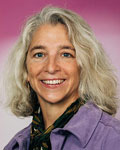
Greta Wilkening, Psy.D., ABPP-Cn, Director of Neuropsychology Service, Interim Training Director,  Division of Neurology, Associate Professor of Pediatrics, University of Colorado Denver School of Medicine

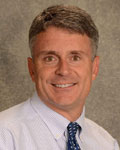
Jennifer Janusz, Psy.D., ABPP-Cn, Director of Training, Division of Neurology, Associate Professor of Pediatrics, University of Colorado Denver School of Medicine

Kendra Bjoraker, Ph.D., Division of Neurology, Assistant Professor of Pediatrics, University of Colorado Denver School of Medicine

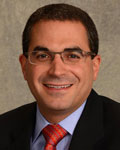
Richard Boada, Ph.D., ABPP-Cn, Division of Neurology, Assistant Professor of Pediatrics, University of Colorado Denver School of Medicine

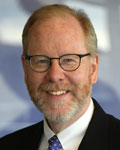
Michael Kirkwood, Ph.D., ABPP-Cn, Co-Director, Concussion Clinic, Department of Physical Medicine and Rehabilitation, Associate Clinical Professor, University of Colorado Denver School of Medicine

John Kirk, Psy.D., ABPP-Cn, Department of Physical Medicine and Rehabilitation, Assistant Clinical Professor, University of Colorado Denver School of Medicine

Amy Connery, Psy.D., ABPP-Cn, Department of Physical Medicine and Rehabilitation, Assistant Clinical Professor, University of Colorado Denver School of Medicine

David A. Baker, Psy.D., Department of Physical Medicine and Rehabilitation ​

Neurology Cropped.2.jpg

Child Neurology Residents
Garnett Smith (PGY-1), Dorlynn Henry (PGY-2), Marcus Wheeler (PGY-5), John Binder (PGY-4), Craig Press (PGY-3), Emily Gertsch (PGY-5), Adam Wallace (PGY-3) (not pictured: Erica Obaro (PGY-1), Melissa Wright (PGY-1), Krista Eschbach (PGY-2), Jan Ludke (PGY-2), Andra Dingman (PGY-3), Amanda Moen (PGY-4), Ara Hall (Epilepsy Fellow)

The Pediatric Neurology Residency Program at the University of Colorado School of Medicine has been training pediatric neurology residents since the 1960’s. Formal ACGME accreditation has been continuous since guidelines for this program were established in 1988. Over 30 residents have been trained since the program’s inception.

Current Child Neurology Residents

John Binder, MD
Andra Dingman, MD
Emily Gertsch, MD
Amanda Moen, MD
Craig Press, MD, PhD
Marcus Wheeler, MD 

Current Pediatric Epilepsy Fellows

Ara Hall, MD

Child Neurology Residents and Fellows may be contacted for additional information regarding the program.

Recent Graduates

Our recent graduates include:

  • Dr. Andrew White; Faculty - University of Colorado School of Medicine; Completed a Fellowship in Epilepsy – University of Colorado School of Medicine
  • Dr. Brendan Mull; Kaiser, Los Angeles
  • Dr. Tim Bernard; Faculty - University of Colorado School of Medicine
  • Dr. Lucy Zawadzki; Faculty - University Of Wisconsin-Madison
  • Dr. Carter Wray; Faculty - Oregon Health & Science University; completed a Fellowship in Epilepsy – The Seattle Children’s Hospital
  • Dr. Edward Jernigan; Pediatric Neurologist in Boise, ID
  • Dr. Britt Stroud; Pediatric Neurologist at Children’s Hospital of Southwest Florida, Fort Meyers, FL
  • Dr. Sita Kedia; Faculty - University of Colorado School of Medicine
  • Dr. Teri Schreiner, Faculty - University of Colorado School of Medicine; Completed a Fellowship In MS – University of Colorado School of Medicine
  • Dr. Cynthia Keator; Pediatric Neurologist - Epileptologist, Fort Worth, Texas; Completed a Fellowship in Epilepsy – University of Colorado School of Medicine
  • Dr. Meredith Schultz; Pediatric Neurologist in Madison, Wisconsin