Sign In

Welcome to the Department of Surgery

Surgery Banner Image
 

Welcome to the Department of Surgery

General Information


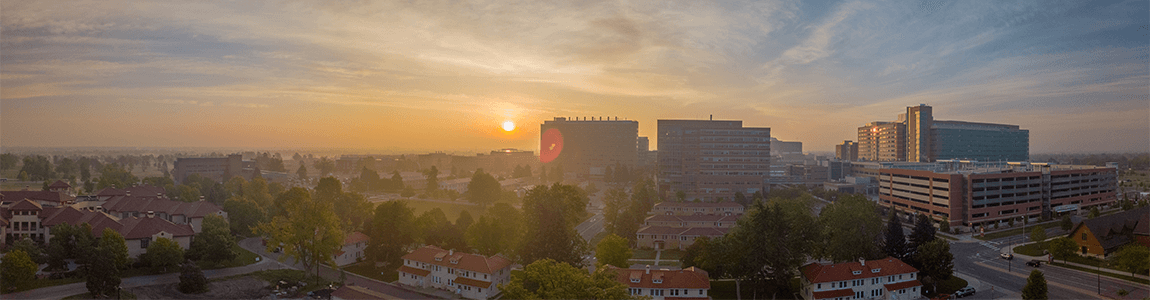
AMC Campus

 The Department of Surgery at the University of Colorado School of Medicine has nine divisions and sections: Burn Surgery; Cardiothoracic SurgeryGI, Tumor & Endocrine SurgeryPediatric Surgery; Plastic & Reconstructive Surgery; Podiatry; Transplant Surgery; Urology and Vascular Surgery...all specializing in quaternary, tertiary and routine operative procedures and treatments.  The Department has 92 faculty members, 82 residents and fellows, 172 clinical faculty and 68 staff members to serve you.  The details of the clinical surgical programs are described under each division. 

Many of the programs are headquartered on the Anschutz Medical Campus adjacent to The Children’s Hospital and the University of Colorado Hospital, a 217-acre campus designed like a college campus with many green walking areas, and northeast of downtown Denver.  There are several hospital affiliates, which includes the University of Colorado Hospital, The Children’s Hospital, Denver Health Medical Center, and the Denver VA Medical Center.  The new VA Hospital, with expected completion date of early 2013, on the Anschutz campus will include a newly designated state-of-the-art Spinal Cord Injury Unit.  The Department of Surgery has close relationships with the University leadership, the Dean of the School of Medicine as well as our affiliate hospitals.  The Department of Surgery is also affiliated with the Cancer Center, the Cardiovascular Center, the Transplant Center, and the Cosmetic Center.  We believe that we have true partnerships that help us better serve our patients. 

Major research contributions are a chief interest of the Department of Surgery, with considerable clinical research in all specialty areas, basic and translational research with external funding in core laboratories in Cardiovascular, General, Pediatric, Transplant, Trauma, Oncology, and Urology Surgery areas.  

The Department of Surgery puts considerable resources and effort into the education of medical students and residents with ACGME approved residencies in general surgery, pediatric surgery, thoracic surgery, and urology, as well as approved transplant, critical care and trauma and pediatric cardiac surgery fellowships.  Our residency and fellowship programs are quite competitive and offer well rounded training.  Many of the residents are very involved in clinical, basic and translational research.  Opportunities for Masters Programs in Public Health and Clinical Research are available.  Medical student education is also an important component of the Department of Surgery with our faculty teaching at all levels of medical student education, and are involved with a very large and effective Medical Student Surgery Club.

The ultimate goal of the Department of Surgery is to offer the University of Colorado a balanced academic program of patient care, teaching, and scientific investigation.  The philosophy of the Department is that all of its full-time faculty should function effectively in all three of these areas.


Richard D. Schulick, MD, MBA, FACS

Richard D. Schulick, MD, MBA, is the new Chairman of The Department of Surgery. He also holds the Aragon/Gonzalez-Giusti Chair in Surgery. Dr. Schulick came from the Johns Hopkins Medical Institutions where he was Chief of the Surgical Oncology Division.

As the son of a U.S. diplomat, Dr. Schulick grew up around Washington, DC, and in Burma, Thailand and India. He received his undergraduate degree in chemical engineering in 1985, medical school degree in 1989, and masters in business education in 2010, all from Johns Hopkins University. As well, he completed a residency in General Surgery there in 1996. He completed fellowships in clinical pharmacology and immunology at the National Institutes of Health, both in 1993, advanced gastrointestinal surgery at Johns Hopkins in 1997, and surgical oncology at Memorial Sloan-Kettering Cancer Center in 1999.

Dr. Schulick, who was on the Johns Hopkins faculty for 14 years, is a recognized leader in the fields of pancreatic, hepatic and biliary surgery, as well as other areas in cancer surgery. His scientific interests are in the area of tumor immunology. He has also received recognition as a highly effective educator.

A deputy editor of the Archives of Surgery, Dr. Schulick has served on editorial boards of several journals in the field of surgery. He has authored or co-authored more than 230 peer reviewed scientific papers, invited manuscripts and book chapters. He has obtained funding from both corporate and government agencies including K23 and R01 funding, and has served on study section of the National Institutes of Health. Dr. Schulick is a member of various organizations including the American Surgical Association, Society of Clinical Surgeons, American College of Surgeons, Society of Surgical Oncology, Americas Hepato-pancreato-biliary Association, Halsted Society, Western Surgical Association, Southern Surgical Association and James IV Association of Surgeons.

 More about Dr. Schulick...

The University of Colorado  had a humble beginning in 1883 with two students and two instructors in a department of medicine at the University of Colorado at Boulder. More than 100 years later, the Center is now located in Aurora and has expanded to include medical, nursing, dental, pharmacy and graduate schools and allied health programs with faculty, residents, staff and student totaling 11,000 and a thriving campus economy of $890 million.

The acquisition of the former Fitzsimons U.S. Army Garrison in Aurora gave the CU a 217-acre campus on which to build a state-of-the-art "health sciences city." Unlike most urban medical centers that must retrofit or lease nearby spaces, CU has constructed a remarkable and visionary medical and educational center for the 21st century.

The design of the future campus provides an environment where collaboration among caregivers and researchers will be seamless, leading to close cooperation in treating patients, educating students, and researching new forms of treatment. Scientific collaboration is enhanced by a 160-acre private bioscience park adjacent to the campus. Discoveries by CU faculty can be taken into development at Colorado Biosciences Park Aurora -- bringing new techniques and treatments from the bench to the bedside at an accelerated pace.

Please visit the University of Colorado School of Medicine site for more information. 

Denver began as a miners’ camp in 1858 and has rapidly evolved to its current status as a regional hub for the mountain states region. Today, the six-county metro area is the 20th largest metro area and the 10th largest downtown area in America.

Located at the base of the eastern slope of the Rocky Mountains and a mile above sea level, Denver's climate is mild and dry with sunshine about 300 days a year. Denverites enjoy the nation’s largest city park system with biking/jogging and hiking trails, golf, boating, climbing, and trout fishing along with easy access to nearby world famous ski slopes.

Denver has a diverse cultural community. The Colorado Symphony Orchestra, the Colorado Ballet, the Colorado Opera, Denver Center for the Performing Arts, Denver Art Museum, Denver Museum of Nature and Science, Denver Zoo, Red Rocks Amphitheatre, and other museums and performance venues in the surrounding suburbs provide many opportunities for entertainment.

Sports fans can root for seven professional sports teams. Denver is one of the few cities in the nation with new playing arenas for four of its sports teams: The Colorado Rockies' Coors Field baseball park, the Nuggets and Avalanche at the Pepsi Center and the Broncos’ Mile High Invesco Field. All four are in LoDo, a historic Denver area known for its condominium lofts, art galleries, small clubs, brew pubs, fine restaurants, and specialty retail shops.

For more information on Denver, see the University of Colorado site or log on to the Denver Metro Convention and Visitors Bureau