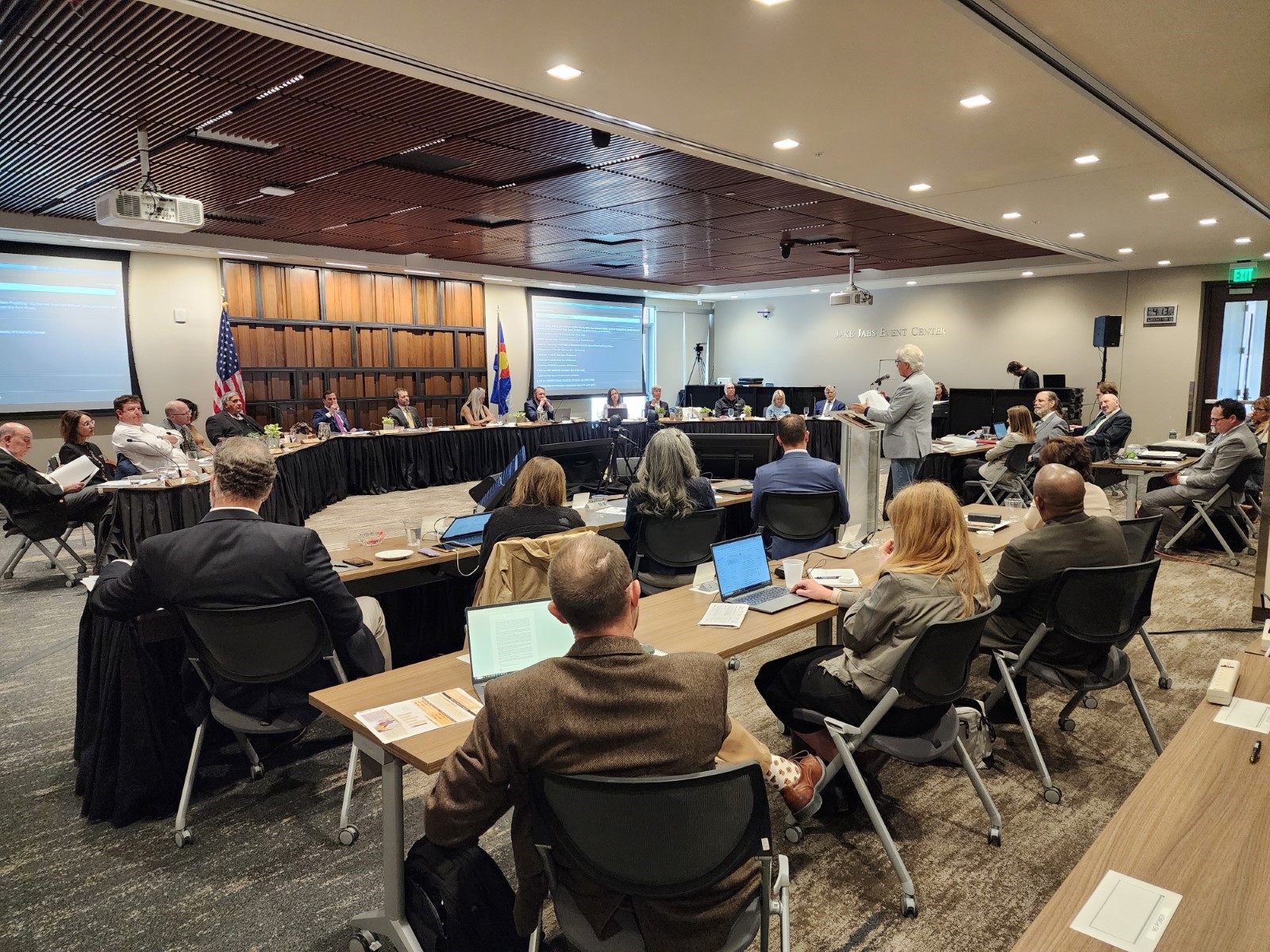
January 2012 - Experts call for integrating mental health into primary care A young woman's diagnosis of infertility leads her to commit suicide a short time later much to the horror of her caring and well-intentioned doctor, who never saw it coming. He thinks it may have been avoided if there had been a mental health professional on his staff. This is one of many stories recounted in a Mental Health Forum and Town Hall held by the Agency for Healthcare Research and Quality (AHRQ) at its September annual meeting.
Ben Miller Elected President of CFHA
Benjamin Miller, PsyD, is the new president of the Collaborative Family Healthcare Association.
Ned Calonge Elected into Institute of Medicine
Bruce Ned Calonge, MD, MPH, Associate Professor of Family Medicine and President and CEO of The Colorado Trust will be inducted at next year IOM annual meeting.
September 2011 - Family physicians driving PCMH success
Among them is Scott Hammond, MD. His practice, Westminster Medical Clinic of Westminster, Colo., is one of 16 PCMH practices involved in a project funded by the state's largest private insurance providers. Since beginning the pilot, Hammond's practice has reported quality improvement gains in diabetes and cardiovascular care measures. The practice is also more viable and staff members are happier.
August 2011 - Advancing Care Together (ACT) aims to combine physical and mental health treatment: 11 new sites create ACT portfolio
A new and collaborative program led by medical experts at the University of Colorado Anschutz Medical Campus aims to bring together local, state and national leaders focused on improving primary care, mental health care and substance abuse treatment. The Advancing Care Together (ACT) program will tap the expertise of clinicians on the front line and work with them to change their practices by addressing the fragmentation that has led to the separate treatment of physical and mental health problems. This three-year program is funded by the Colorado Health Foundation and will be housed at the CU School of Medicine Department of Family Medicine.
August 2011 - Shared decision making leads to better outcomes
Patients who are active participants in managing their health and care have better outcomes than patients who are passive recipients, Jane Sarasohn-Kahn writes in her Health Populi blog. Activated patients have better treatment adherence, are less likely to choose major surgery when offered and have more accurate risk perceptions. Overall, activation leads to more appropriate health service utilization--and potentially lower costs.
August 2011 - Using Shared-Savings Strategies to Cut Health Care Costs
New approaches to health care payment that encourage providers to reduce medical spending by allowing them to share in the net savings have attracted considerable interest recently. These wide-ranging approaches have been driven by the push for performance-based payment for medical homes and other providers, as well as the Affordable Care Act's accountable care organization provisions.
August 2011 - Colorado demonstration project to build on success
Sixteen Colorado primary care practices were among those participating in one of the nation's first multi-payer, multi-state patient centered medical home pilots. Convened by HealthTeamWorks, the project began in 2008 and runs through 2012. Early results have been positive, Marjie Harbrecht, MD, CEO, HealthTeamWorks, writes in Colorado Health News. "Practices have made tremendous strides in building infrastructure, including on-site care management services. Trends are showing improvement on quality measures, coordination of care and satisfaction." Among this phase's goals: Expand connections with "medical neighborhoods."
July 2011 - Health Affairs paper looks at Medicaid medical home success
Seeking to address Medicaid's soaring costs and lagging health outcomes, several states are promoting patient centered medical homes. Early results show promising trends in costs, quality, and access to care. A Commonwealth Fund-supported article in Health Affairs focuses on 17 states that are aligning medical home standards with incentive payments to support primary care reform. "These early results give states good reason to continue developing patient centered medical homes as part of their Medicaid programs."
July 2011 - What Other States Can Learn from Vermont's Bold Experiment: Embracing a Single-Payer Health Care Financing System
Vermont's newly passed single-payer health care financing law will produce annual savings of 25.3 percent compared with current spending, cut employer and household spending by $200 million, create 3,800 jobs, and boost the state's overall economic output by $100 million, according to this Commonwealth Fund–supported study.
July 2011 - U.S. Continues to Far Outspend Other Nations on Health Care
For more than a decade, The Commonwealth Fund has analyzed data on comparative health system performance compiled annually by the Organization for Economic Cooperation and Development (OECD). In a new issue brief, Fund researchers report on a range of OECD health data from 12 industrialized countries, including the U.S.
May 2011 - Professionalism First at the University of Colorado School of Medicine
An educational campaign that heightens awareness as to the importance of professionalism, promotes learner and faculty development, and highlights the school’s new process for students and residents to report lapses in or exemplary professional behavior by faculty and residents.
March 2011 - Frank deGruy's Health Care Vision in High Demand as a Family Medicine Man
The vision that family medicine should be the hub of a patient-centered health care system integrating generalists as well as mental health and other specialists - has endured and is now taking more distinct form.
The Health & Human Services Department has released the National Strategy for Quality Improvement in Health Care. The HHS strategy includes calls for increased adoption of electronic health records, which are foundational for many projects that will realize HHS' goals. The strategy was required under the health reform law and is the first effort to create national aims and priorities to guide local, state and national efforts to improve health care quality.
Mar 2011 - New Report Offers Consensus on ACOs, PCMH
The evidence of success of the medical home combined with the need for accountable delivery system reform demands action--and stakeholders have arrived at a consensus about what that consensus should look like, according to Better to Best: Value-Driving Elements of the PCMH and ACO a new report from the Patient-Centered Primary Care Collaborative, in partnership with The Commonwealth Fund and the Dartmouth Institute for Health Policy and Clinical Practice. The report outlines action steps and recommendations for policy, demonstration programs and research
Mar 2011 - Sharing Resources: Opportunities for Smaller Primary Care Practices to Increase Their Capacity for Patient Care
Findings from the 2009 Commonwealth Fund International Health Policy Survey of Primary Care Physicians
Mar 2011 - Top Ranks by US News and World Report
The University of Colorado School of Medicine and the Department of Family Medicine once again earned high rankings nationally in the U.S. News & World Report annual survey of medical schools.
Feb 2011 - Prestigious Award Received by Our Own Laura Borgelt
Laura M. Borgelt, associate professor, CU-Denver, Clinical Pharmacy and Family Medicine was awarded the Elizabeth D. Gee Memorial Lectureship Award, which recognizes and honors an outstanding CU faculty member for efforts to advance women in academia, interdisciplinary scholarly contributions and distinguished teaching.
Feb 2011 - The Safety Net Medical Home Initiative
Health centers in Colorado, Idaho, Massachusetts, Oregon, and Pennsylvania—each of which partnered with 10 to 15 safety-net clinics in their state—are receiving technical assistance, training, and ongoing support in order to improve how they deliver care to patients, including better coordinating care, enhancing access to care, improving doctor–patient interactions, and implementing quality improvements. The
health centers also receive funding to support a medical home facilitator who leads clinic-based quality improvement projects and other activities.
Feb 2011 - The Commonwealth Fund Connection Innovations in Primary Care: What's in the Affordable Care Act?
Feb 2011 - Child Obesity Summit Held in Denver
Community members and the U.S Surgeon General’s Office teamed up on February 5, 2011 to battle childhood obesity. The “2040 Partners for Health” hosted a health summit at Johnson and Wales University in Denver.
Feb 2011 - State Roles in Promoting Accountable Care Organizations
report from The Commonwealth Fund and the National Academy for State Health Policy examines key ways in which states have supported development of the ACO model, focusing on Colorado, Massachusetts, Minnesota, North Carolina, Oregon, Vermont, and Washington.
Jan 2011 - Size Doesn't Matter for Medical Homes
There may be reasons for not becoming a medical home, but being too small isn't one of them, Philip Betbezewrites in a HealthLeaders Media column. He points to Family Medicine, Geriatrics and Wellness in Lower Gwynedd, Pa., where Joseph Mambu, MD, is one of only two full-time physicians. Mambu, an early adopter of the medical home model, believes there's a place for small practices under health care reform--provided they are willing to make the same changes he did.
Jan 2011 - NCQA Releases New PCMH Program Standards
Jan 2011 - Dr. Chris Urbina Named Executive Director of CO Dept. of Public Health & Environment
Jan 2011 - Resident Revolution: Family Medicine Bids to Reshape Health Care
The Anschutz Medical Campus is at the heart of the P4H movement that is quietly alterering the health care landscape. The Dapartment of Family Medicine is steadlity laying the foundation for what could be the new paradigm for delivering care and working from the ground up, starting with new ways to educate its residents.
2010 News
Outcomes of Implementing Patient Centered Medical Homes Interventions: A Review of the Evidence from Prospective Evaluation Studies in the U.S.
Salud Family Health Center and the Colorado Plains Medical Center Each Named Center for Excellence in Rural Training
The award recognizes the training that Salud and the Medical Center provide to medical students in various programs, including the Rural Track. Rural Track Director, Dr. Mark Deutchman, presented the CERT awards. The CERT program aspires to increase the number and variety of healthcare professionals who choose to live and work in rural areas of Colorado through professional and personal life experiences. The CERT program works in concert with the University of Colorado Department of Family Medicine and the Area Health Education Centers around the State.
Placing the Patient Front and Center
The patient-centered ‘health home’ promises to revitalize primary care and provide integrated, cost-effective treatment. How can psychologists get in the door?
ACP Embraces Patient-Centered Medical Home 'Neighbor' Concept
The American College of Physicians released a policy paper calling for the inclusion and cooperation of subspecialists and other health care professionals in the patient centered medical home, laying out a framework for how interactions between the PCMH and "PCMH neighbors" (PCMH-N) take place (e.g., preconsultation exchanges to expedite or prioritize care; a formal consultation to address a specific question or procedure; or transfer of the patient to the PCMH-N for all care).
A November briefing, cosponsored by the Kaiser Family Foundation, the Alliance for Health Reform and the Robert Wood Johnson Foundation, considered some of the workforce issues raised by health care reform. Among the questions addressed: How much of the workforce shortage can be alleviated by payment incentives in the new law for both primary care and general surgery, and other new incentives to practice in underserved areas?
CMS Introduces New Center for Medicare & Medicaid Innovation
Created by the Affordable Care Act, the Innovation Center will examine new ways of delivering and paying for health care that can save money for Medicare and Medicaid while improving the quality of care. CMS also announced the launch of new demonstration projects that will support efforts to better coordinate care and improve health outcomes for patients.
Incentive Payments Meant to Jump-start 'Meaningful Use' of EHRs
The federal government's push for physician implementation of electronic health record, or EHR, technology is all about facilitating the delivery of higher-quality health care and supporting early detection of illness
3D Rendering of New Health and Wellness Center at Anschutz Medical Campus
Designed to be a new paridigm in health promotion tha fosters the scientific understanding of nutrition, physical activity, behavior, and weight management.
CU scientists secure $847 million in research funding
University of Colorado faculty researchers on four campuses secured more than $847 million in sponsored research funding in fiscal year 2009-10 to advance scientific work in laboratories and in the field, remaining highly competitive among peers despite the economic downturn.
New Longitudinal Track for UCDenver students interested in urban underserved communities
CU-UNITE is a new longitudinal track for students at the University of Colorado Denver School of Medicine, College of Nursing nurse practitioner, and physician assistant programs. Designed for students interested in working with urban underserved communities, the track will provide the skills and support needed for future health care providers serving those urban populations.
Obama Administration Announces Investment in Primary Care Physician Training
The Obama administration has officially unveiled a series of investments to expand the nation's primary care workforce, including measures to train more than 500 new primary care physicians by 2015.
AMA Delegates Adopt Measures to Promote Primary Care, Rural Practice
The AMA will begin promoting training in the patient-centered medical home, or PCMH, as a way to encourage medical students and residents to choose a career in primary care.
TransforMED National Demonstration Project Finds Most Practices Need Support to Make Changes
Rose Celebrates 40 Years of Family Medicine Physician Education
On June 5, 1970, the family medicine training program at Rose Medical Center received official accreditation as a recognized training program for specialty education.
Invited Commentary on Changes to PCMH Standards
The National Committee for Quality Assurance (NCQA) seeks public comment on proposed standards for the next version of its Physician Practice Connections®―Patient-Centered Medical HomeTM (PPC®-PCMHTM) requirements.
Safety Net Clinics to Receive $18M from The Colorado Health Foundation
Colorado's 15 Federally Qualified Health Centers will receive nearly $18 million from the Colorado Health Foundation to cover expenses ranging from construction projects to simple operating costs
Sifting the Records to See What Really Works: The Genesis of DARTNet
What if someone could find a way to cull the medical records of millions of people to truly compare treatment plans and see what works best for individual patients?
Chris Urbina Shapes Community Health
In 2004, Urbina was named director of the Denver Public Health Department. With him came a long-held philosophy that individual medical practice and the larger role of community health are intertwined.
"This Has Always Been My Dream": A Family Medicine Resident's Profile
As a resident Vernesha Williams has worked at The Children’s Hospital, Swedish Medical Center in Englewood and Denver Health. In her second year she plans on serving in rural communities. She’s focusing on family medicine, with plans to practice in medically underserved urban areas.
Federal Grant Helps Train Rural Doctors
The Rural Track program, headed by Dr. Mark Deutchman, has been funded for six years by grants from the Colorado Trust, the Kaiser Foundation and the School of Medicine.
Keeping Doctors in Rural Areas
The University of Colorado Denver School of Medicine tries to do its part through its Rural Track and Rural Scholars programs. Both programs aim to supply physicians to underserved areas.